AI Resources

Explore expert
AI articles & resources

Practical AI insights, guides, strategies, and technical resources to help you understand and apply artificial intelligence across identity, security, and automation.

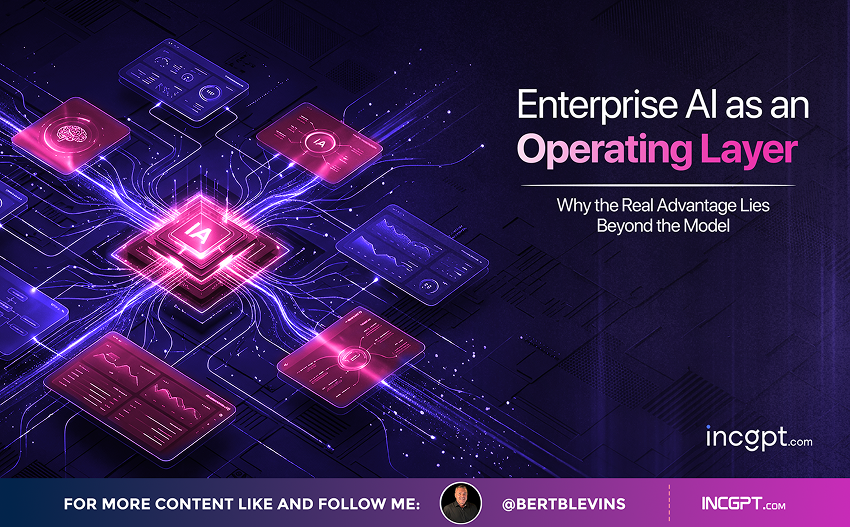
Enterprise AI as an Operating Layer Why the Real Advantage Lies Beyond the Model

A deep divide is forming in enterprise artificial intelligence, and it has little to do with which foundation model scores highest on the latest benchmark. While headlines track the rivalry between large language model providers and celebrate incremental reasoning improvements, the more consequential competition is unfolding elsewhere. The organizations poised to win are not necessarily those with the most powerful model — they are the ones embedding intelligence directly into the operational fabric of their businesses.

Enterprises Are Racing to Deploy AI — But Most Still Don’t Have a Strategy

Artificial intelligence has become the defining conversation in enterprise technology. From boardrooms to IT departments, the mandate is clear: adopt AI, and do it quickly. But a growing body of evidence suggests that most organizations are charging headlong into AI deployment without the foundational strategy needed to make it work. A recent report from business services firm Altimetrik and HFS Research, which surveyed more than 500 technology leaders worldwide, paints a striking picture of an industry caught between ambition and unpreparedness.

Exploring OpenClaw The AI Agent Revolutionizing Workflow Automation in 2026

The world of artificial intelligence is rapidly evolving, and one tool that has garnered significant attention in 2026 is OpenClaw. Unlike typical AI applications that only engage in conversation, OpenClaw is an open-source agent capable of executing tasks on a user’s computer. From automating workflows to controlling APIs, OpenClaw is revolutionizing how users interact with their devices, bringing the potential for a new era of AI productivity.

False Confidence – Why Most Enterprises Are Less Prepared for AI Risk Than They Believe

Across industries, enterprise leaders are expressing growing confidence in their ability to govern artificial intelligence. Surveys show that a majority of decision-makers believe their organizations have adequate controls in place, that they would detect a misbehaving AI model quickly, and that their governance frameworks are keeping pace with deployment. But a closer look at how these same organizations are actually structured reveals a very different picture. What many enterprises have built is not a governance strategy. It is an illusion of one.

From Alerts to Autonomy – How AI Agents Are Rewiring Cyber Defense

The era of dashboards and ticket queues is fading. Autonomous AI agents are starting to investigate, decide, and act at machine speed — and that changes what it means to defend a network.

From Sceptic to Convert – How Vibe Coding Quietly Rewired the Way I Build Software

A trip to Shenzhen, an unfamiliar startup, and three months of late nights turned a buzzword I had been dodging into the most productive tool I have ever used.

From Vibe-Coding Skeptic to Antigravity Convert How AI Tools Got Me Building Again

I’ll confess to something that probably ought to embarrass me more than it does. For a long stretch, I treated AI coding assistants as little more than a punchline. The phrase “vibe coding” alone was enough to make me roll my eyes. These days I open one of these tools almost every week to put together something small and genuinely useful, and I’d have a hard time going back to life without them.

Generative AI Has Become a Force Multiplier for Cybercriminals and the Evidence Is Already Here

For years, cybersecurity experts warned that artificial intelligence would eventually lower the barrier to entry for cybercriminals that the same tools empowering developers and marketers would one day be turned against businesses, governments, and everyday users. That day, it now appears, has already arrived.

Goodbye Docker RunPod Flash Brings Pure-Python Deployment to Serverless GPUs

A new MIT-licensed Python SDK aims to remove the container tax from AI development, letting engineers ship a function to a remote GPU as easily as running a local script.

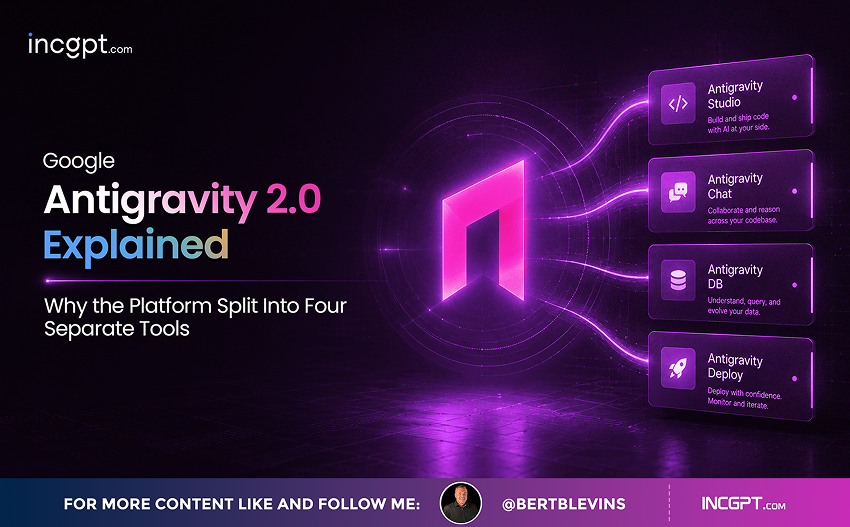
Google Antigravity 2.0 Explained Why the Platform Split Into Four Separate Tools

Google has reshaped how developers work with AI agents in its latest release. Antigravity 2.0 moves away from a single bundled product and adopts a modular structure built around four distinct pieces: a standalone desktop application, a command-line interface (CLI), a software development kit (SDK), and an integrated development environment (IDE). Each component targets a different style of work, giving users the freedom to assemble a setup that matches how they actually build.

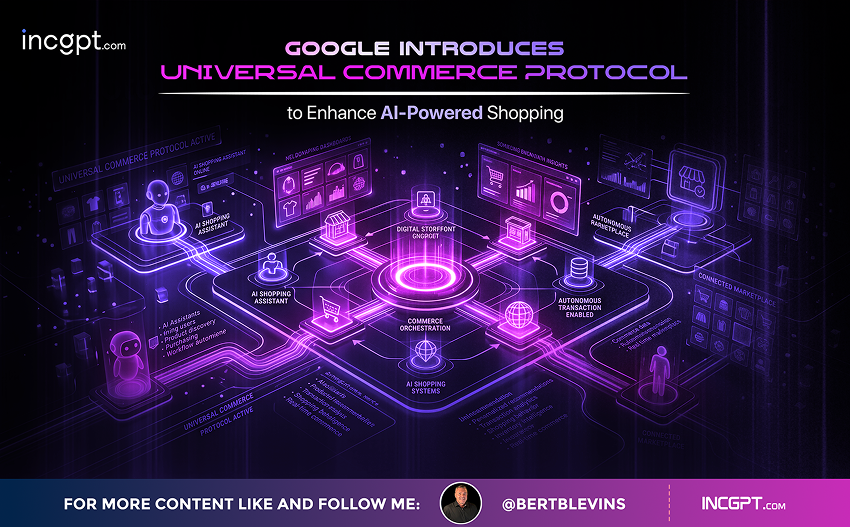
Google Introduces Universal Commerce Protocol to Enhance AI-Powered Shopping

Google has unveiled a new open standard called the Universal Commerce Protocol (UCP) for AI-driven shopping, announced at the National Retail Federation (NRF) conference. Developed in collaboration with leading companies such as Shopify, Etsy, Wayfair, Target, and Walmart, the protocol enables AI agents to streamline various stages of the customer buying process, from product discovery to post-purchase support. The key benefit of UCP is that it consolidates these processes under one framework, eliminating the need for multiple agent connections.

Google Just Gave Karpathy’s LLM Wiki Idea the Standard It Was Missing

There’s a familiar arc in software: someone shares a clever personal workflow, a community runs with it, and within a year the idea has fractured into a dozen incompatible versions of itself. That’s roughly what happened to Andrej Karpathy’s LLM wiki concept — the idea of using markdown files, tags, and metadata to let a language model build and navigate a personal knowledge graph. It caught on fast. It also splintered fast, because nobody had agreed on what the underlying files should actually look like. Google’s new Open Knowledge Format, or OKF, is an attempt to fix that at the root.

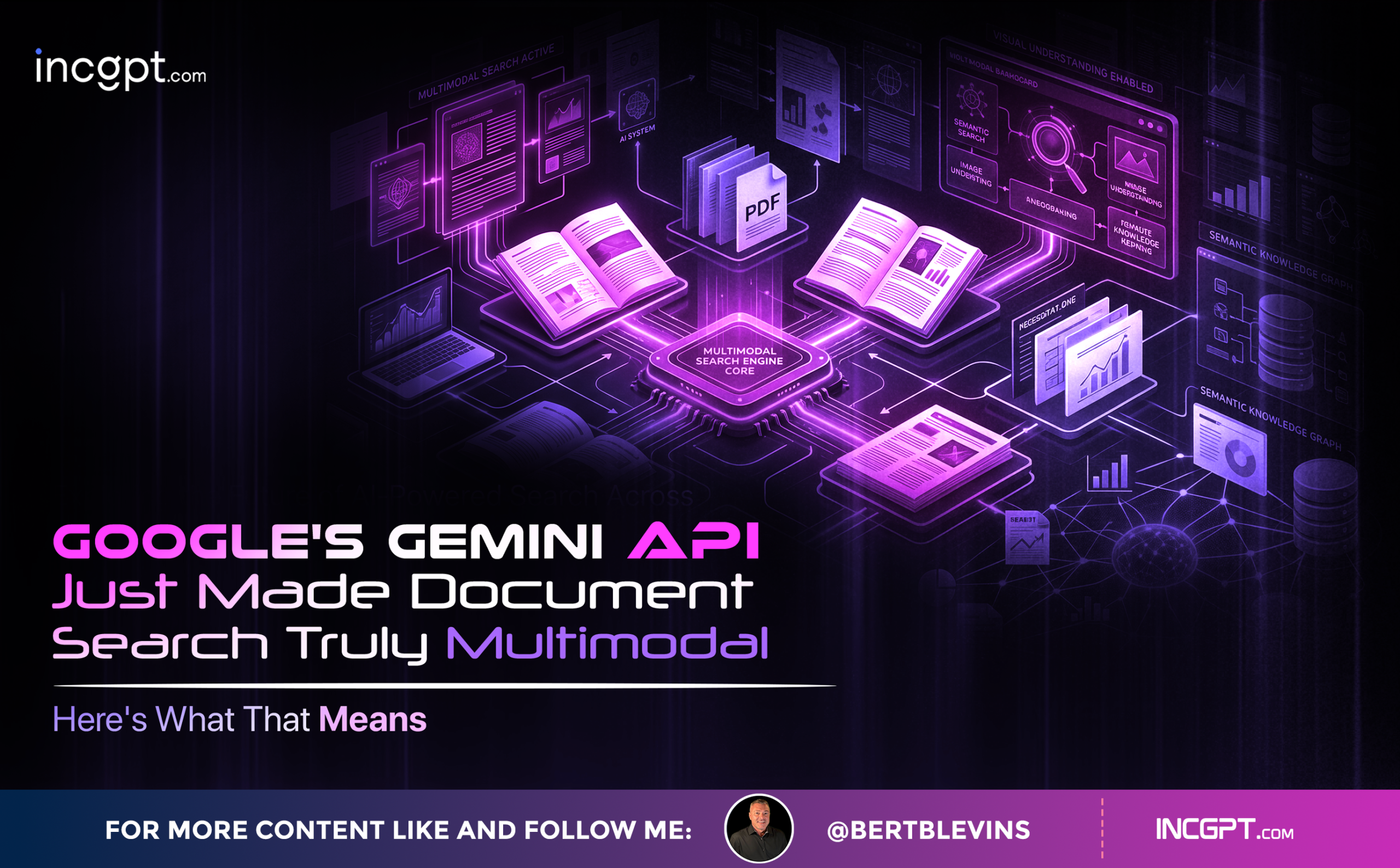
Google’s Gemini API Just Made Document Search Truly Multimodal — Here’s What That Means

Google has rolled out a major upgrade to its Gemini API, extending retrieval-augmented generation (RAG) so that text and images can now live inside the same unified vector space. For developers wrestling with enterprise documents that mix paragraphs, diagrams, scanned pages, and tables, the change is a long-awaited shift. The release also introduces page-level citations and metadata-based filtering — two features that together push Gemini closer to the precision and traceability that demanding industries like healthcare, law, and engineering have been asking for. Here is a closer look at what changed, why it matters, and how the pipeline works under the hood.

Governing Machines That Act Why Agentic AI Demands a New Rulebook

Almost every AI governance framework running in production today was built for a world that is quietly slipping away. Those frameworks were designed for predictive models, the kind of systems that score a loan application, classify an image, rank a feed, or recommend a next step. In that world the model produces an output, and a human or a deterministic piece of software decides what to do with it. Governance had a natural checkpoint. You validated the model, approved its behavior, documented its limits, signed it off, and the human stayed in the loop.

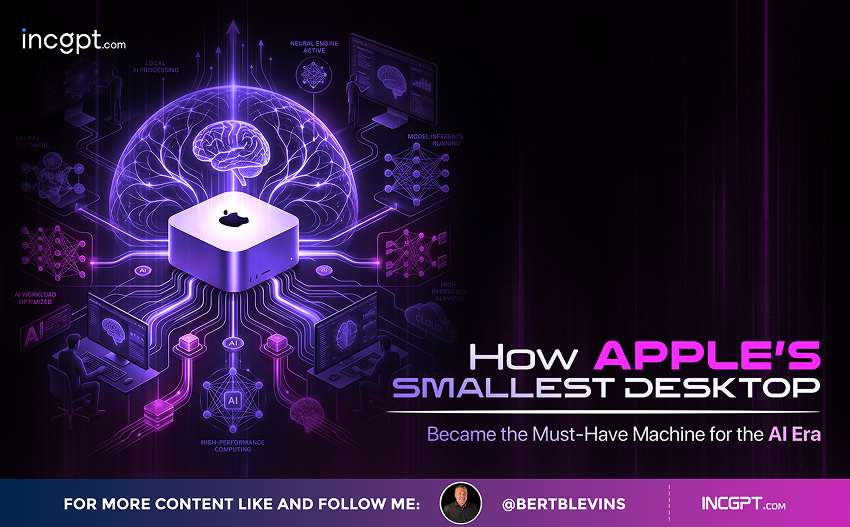
How Apple’s Smallest Desktop Became the Must-Have Machine for the AI Era

For most of its existence, the Mac Mini was an afterthought in Apple’s product lineup. It was the entry-level desktop, the affordable option people bought when they wanted a Mac but did not want to pay for an iMac or a MacBook Pro. It represented roughly three percent of Apple’s total Mac unit sales in the United States, according to Consumer Intelligence Research Partners. It was, by any measure, a niche product. That changed almost overnight when the world discovered that this tiny silver puck was quietly one of the best machines on the market for running artificial intelligence locally.

How I Stopped Repeating Myself to AI and Started Getting Real Work Done

A simple setup inside Google Gemini turned a daily frustration into a permanent fix — and you can do it in under five minutes

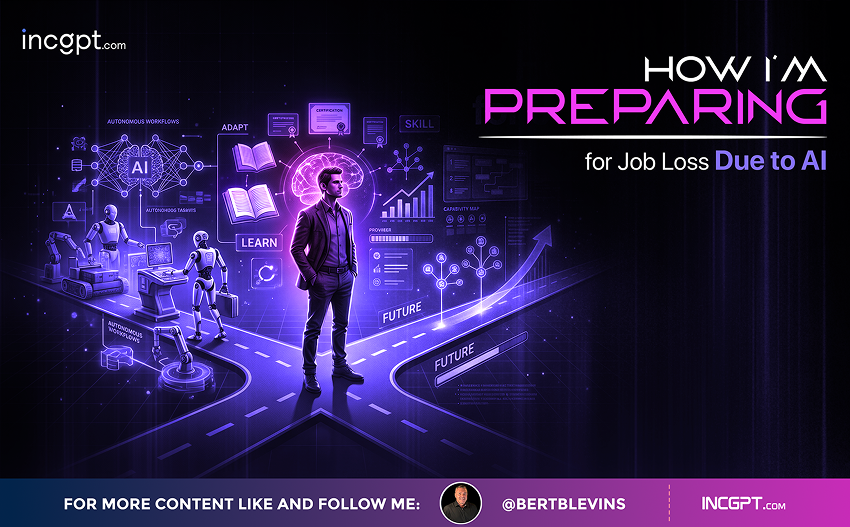
How I’m Preparing for Job Loss Due to AI

The rise of artificial intelligence (AI) is reshaping industries at an unprecedented rate. As a writer, my profession is one of the most susceptible to the advances in AI, with technology now capable of drafting content, managing social media, and optimizing workflows—tasks that were once solely human endeavors. With AI poised to take over many white-collar jobs, I’ve been working on a solid financial strategy to weather potential job disruptions.

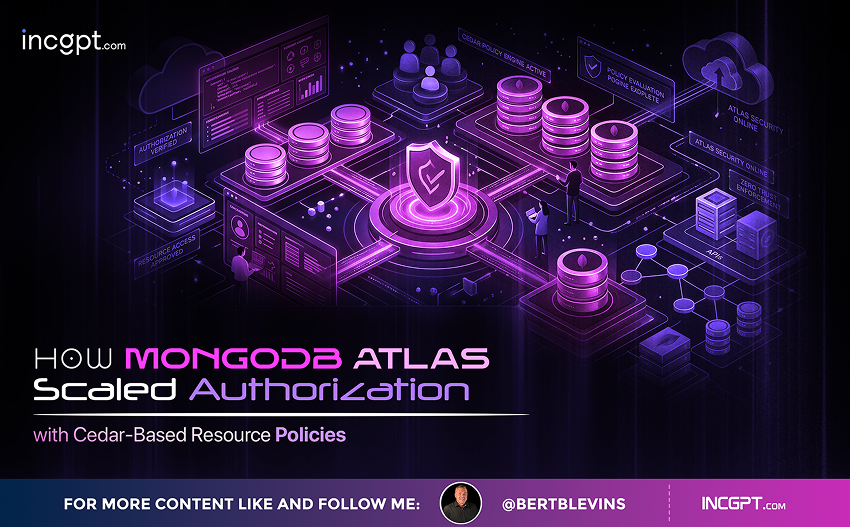
How MongoDB Atlas Scaled Authorization with Cedar-Based Resource Policies

Authorization has a funny way of starting simple and getting complicated fast. A handful of user roles turns into a sprawling rulebook that cuts across services, regions, and compliance regimes. Stuffing that logic inside application code only makes things worse — policies end up scattered across repositories, nearly impossible to audit, and painful to update without a full release cycle.

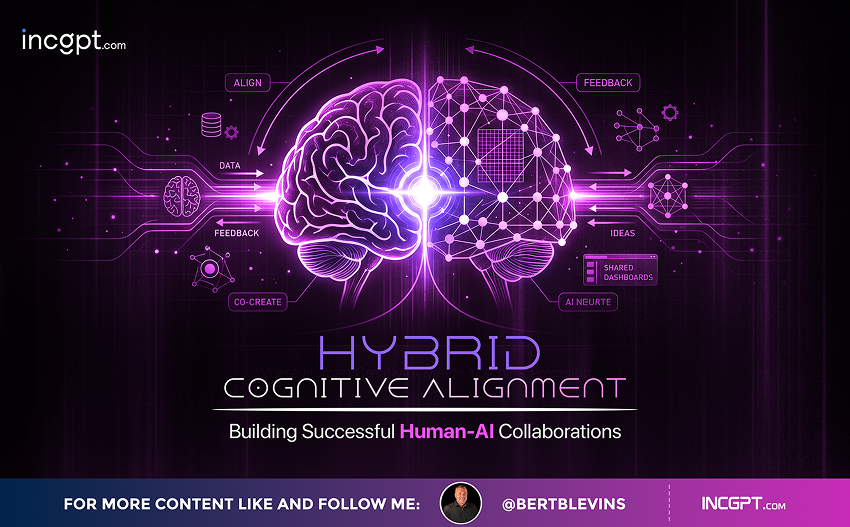
Hybrid Cognitive Alignment Building Successful Human-AI Collaborations

As artificial intelligence (AI) continues to integrate into various industries, it is no longer sufficient for AI to merely be a tool that performs tasks. Instead, the key to successful implementation lies in how AI and humans interact and collaborate. The concept of “hybrid cognitive alignment” has emerged as a necessary framework for optimizing human-AI teamwork, emphasizing the importance of understanding and recalibrating expectations over time.

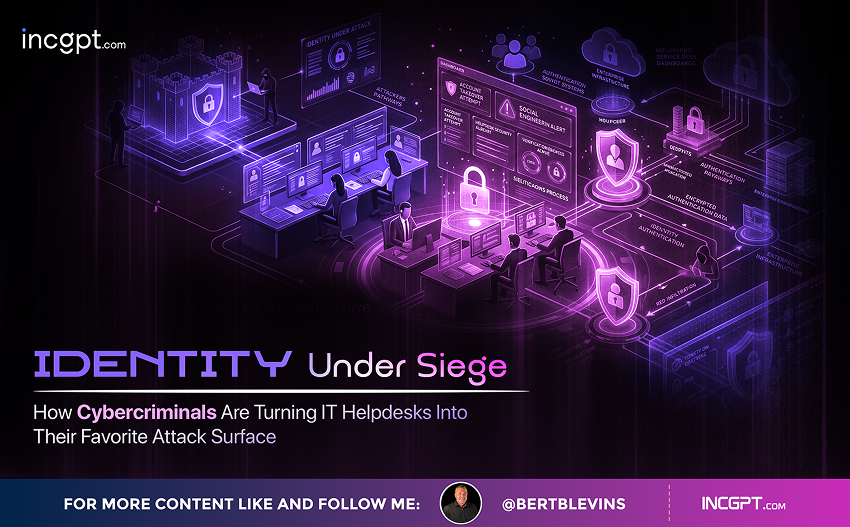
Identity Under Siege How Cybercriminals Are Turning IT Helpdesks Into Their Favorite Attack Surface

For years, the frontline of corporate cyber defense was the email inbox. Security teams trained employees to spot suspicious links, scrutinize sender addresses, and ignore unexpected attachments. However, attackers have shifted tactics dramatically. The hottest new entry point into enterprise networks is not a phishing email or a malicious file. It is something far more ordinary: a phone call to the IT helpdesk.