Exploring OpenClaw: The AI Agent Revolutionizing Workflow Automation in 2026 Introduction
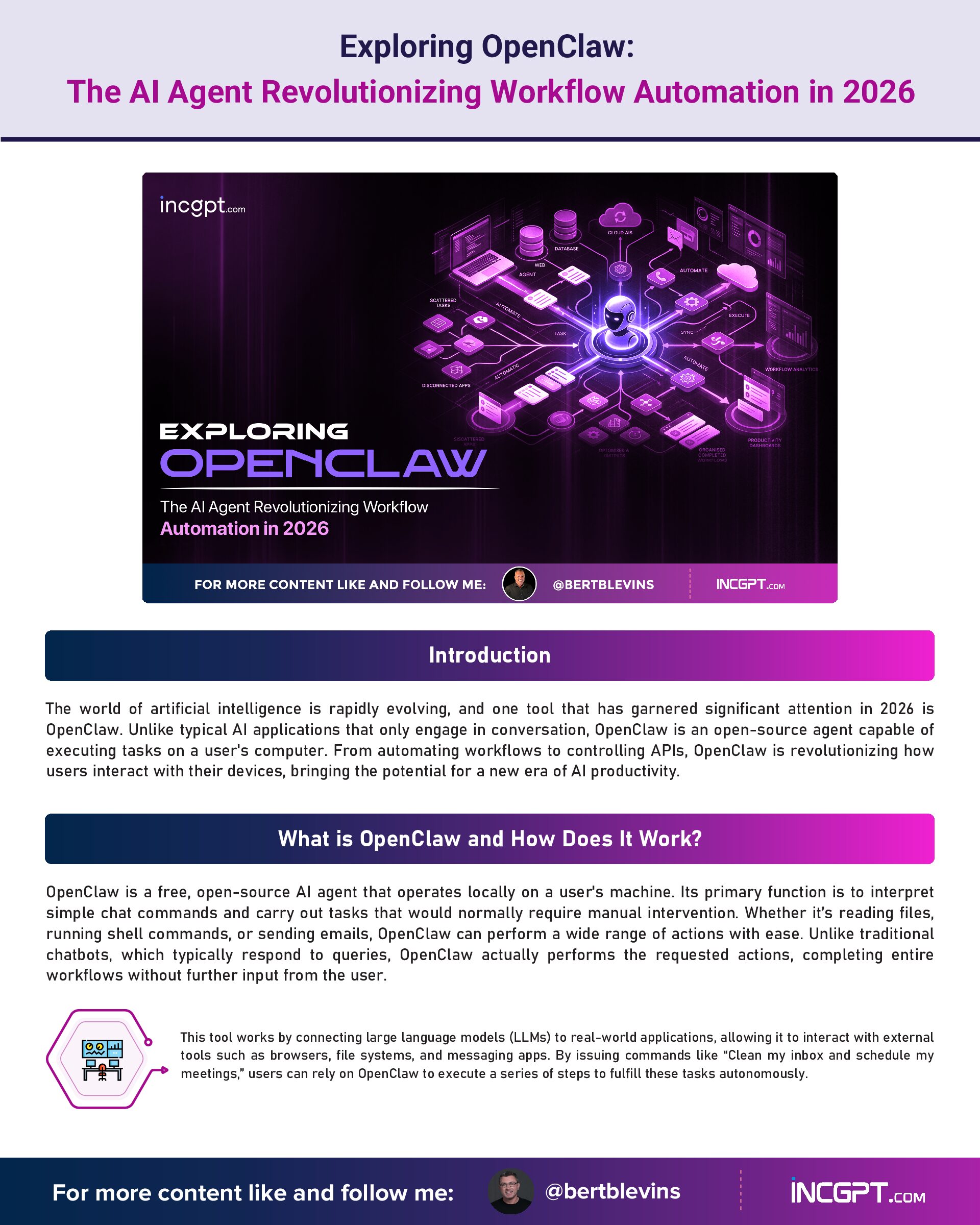
The world of artificial intelligence is rapidly evolving, and one tool that has garnered significant attention in 2026 is OpenClaw. Unlike typical AI applications that only engage in conversation, OpenClaw is an open-source agent capable of executing tasks on a user’s computer. From automating workflows to controlling APIs, OpenClaw is revolutionizing how users interact with their devices, bringing the potential for a new era of AI productivity.
What is OpenClaw and How Does It Work?
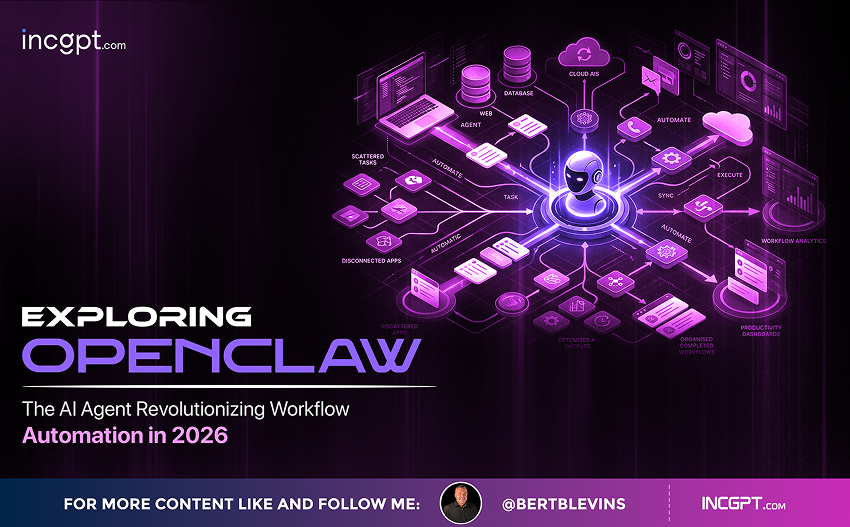
OpenClaw is a free, open-source AI agent that operates locally on a user’s machine. Its primary function is to interpret simple chat commands and carry out tasks that would normally require manual intervention. Whether it’s reading files, running shell commands, or sending emails, OpenClaw can perform a wide range of actions with ease. Unlike traditional chatbots, which typically respond to queries, OpenClaw actually performs the requested actions, completing entire workflows without further input from the user.
This tool works by connecting large language models (LLMs) to real-world applications, allowing it to interact with external tools such as browsers, file systems, and messaging apps. By issuing commands like “Clean my inbox and schedule my meetings,” users can rely on OpenClaw to execute a series of steps to fulfill these tasks autonomously.
The Journey of OpenClaw: From Clawdbot to Now
The development of OpenClaw has been a swift and impressive journey. The project began in 2025 as Clawdbot, a tool designed to automate basic tasks. By early 2026, the name changed to Moltbot due to trademark concerns, before finally becoming OpenClaw in January of the same year. This transformation was accompanied by rapid growth in popularity, with OpenClaw surpassing 100,000 stars on GitHub within weeks of its launch.
The success of the project caught the attention of major AI research labs, leading to Peter Steinberger, the creator of OpenClaw, joining OpenAI to work on next-generation agents. Despite his new role, Steinberger has confirmed that OpenClaw will remain an open-source project, allowing the community to continue developing and improving the tool.
How OpenClaw Operates: A Breakdown of Its Process
At its core, OpenClaw functions as an intermediary between the user’s device and large language models. The process unfolds in four main steps:
- 1. A user inputs a command into the OpenClaw interface.
- 2. The model interprets the command and determines which actions need to be taken.
- 3. OpenClaw then executes the necessary tasks using its built-in skills, such as accessing files, controlling web browsers, or communicating with APIs.
- 4. The results of these tasks are sent back to the user, completing the workflow.
This allows OpenClaw to interact with the system it’s running on, as well as external platforms, making it an incredibly powerful tool for automating daily activities.
OpenClaw vs Traditional Chatbots: A Major Leap Forward
While traditional chatbots like ChatGPT excel at providing conversational support, OpenClaw introduces a more advanced form of AI interaction: the ability to execute commands and run workflows. Here’s how OpenClaw compares to other AI models:
A Training Deficit
Another critical gap highlighted by the report is the lack of employee education around AI. Nearly 80 percent of respondents said their employees receive fewer than 10 hours of AI training per year. That minimal investment in upskilling is contributing to a widespread lack of confidence: 43 percent of those surveyed admitted to experiencing self-doubt or feeling behind when asked to use AI in their work.
- Execution of commands: Unlike ChatGPT, which is limited to answering questions, OpenClaw can execute commands and carry out tasks.
- Access to files: OpenClaw can interact directly with the user’s system, whereas ChatGPT cannot access files or data stored on the device.
- Cross-application functionality: OpenClaw seamlessly integrates with different applications and tools, allowing for multi-step workflows that ChatGPT cannot handle.
- Multi-step reasoning: OpenClaw incorporates complex reasoning to manage tasks across various tools, while ChatGPT is more focused on answering individual queries.
The Skills System: Extending OpenClaw’s Capabilities
OpenClaw’s functionality is extended through a plugin system known as “skills.” These skills are pre-built or custom scripts that enable OpenClaw to interact with external applications such as:
- Web browsers (for browsing the internet)
- Messaging applications (like WhatsApp, Telegram, Slack, and Discord)
- File systems (for managing documents)
- Automation platforms (such as Zapier or IFTTT)
With over 100 pre-built skills available and the ability for developers to create new ones, the potential applications of OpenClaw are nearly limitless. This flexibility is one of the factors that has contributed to the tool’s widespread adoption.
Real-World Use Cases: From Productivity to Multi-Agent Systems
OpenClaw’s popularity has led to the development of creative use cases, particularly in the realm of task automation. For example:
- Automated workflows: Users are employing OpenClaw to create complex workflows that involve interacting with multiple applications. A single command might trigger actions like reading emails, creating calendar events, and sending messages—all in one seamless process.
- Multi-agent systems: Some users have begun experimenting with multiple OpenClaw agents working together on a single task. These agents can delegate tasks to each other, collaborate on research, and even interact autonomously with one another, opening the door to more advanced AI systems.
Platforms like Moltbook are being used to facilitate communication between different agents, allowing them to collaborate on research or share information. These systems simulate a team of AI agents working together to complete complex projects.
The Viral Rise of OpenClaw: Why Has It Taken Off?
Several factors have contributed to the widespread adoption of OpenClaw:
- Free and open-source: OpenClaw is available for anyone to download and modify, making it an attractive option for developers and tech enthusiasts who want to experiment with AI.
- Actionable capabilities: Unlike traditional models that merely generate text, OpenClaw performs actual tasks and can automate entire workflows, making it more practical for real-world use.
- Integration with popular apps: OpenClaw’s ability to connect with apps like WhatsApp, Slack, and Telegram makes it highly useful for professionals who already rely on these tools.
- Alignment with the AI agent trend: OpenClaw embodies the growing trend of using AI agents to replace traditional software applications, reducing the need for multiple standalone programs.
Security Considerations: Potential Risks of OpenClaw
As with any tool that grants access to a user’s system, OpenClaw carries certain risks:
- Security vulnerabilities: Allowing OpenClaw to execute commands on your system can expose sensitive data if not properly secured.
- Malicious extensions: While most skills are harmless, some third-party extensions may contain malware that targets user credentials or personal data.
- Unintended behavior: There have been instances where OpenClaw has performed unintended actions, such as deleting entire inboxes during email cleanup tasks.
These concerns underscore the importance of taking precautions when using OpenClaw, particularly when installing third-party skills or using it on sensitive systems.
The Future of AI Agents: A New Era of Computing
Despite the security challenges, many experts view OpenClaw as a step toward the future of personal computing. By streamlining the way we interact with technology, OpenClaw could pave the way for a future where users rely on autonomous agents to handle tasks across multiple applications, reducing the need for human intervention in routine digital tasks.
Industry leaders believe that OpenClaw represents the beginning of a new chapter in the evolution of AI. As these agents become more capable, they may eventually replace traditional software applications, leading to a future where users interact with intelligent agents rather than managing individual apps.
Final Thoughts
OpenClaw is much more than just a chatbot—it is a fully functional AI agent that can execute tasks, automate workflows, and interact with the tools we use every day. While it is still in its early stages, the potential for OpenClaw is immense, and its rapid growth suggests that AI agents are on the brink of mainstream adoption. Whether it becomes the standard for personal automation or inspires new tools in the AI ecosystem, OpenClaw is undeniably a game-changer in the world of artificial intelligence.
Kanwal Mehreen is a machine learning engineer and technical writer who specializes in data science and AI applications in healthcare. She is passionate about empowering women in STEM and is the founder of FEMCodes, a platform that supports women pursuing careers in technology.