Title: Google's Gemini API Just Made Document Search Truly Multimodal — Here's What That Means
2-Minute Script for YouTube Shorts Video:
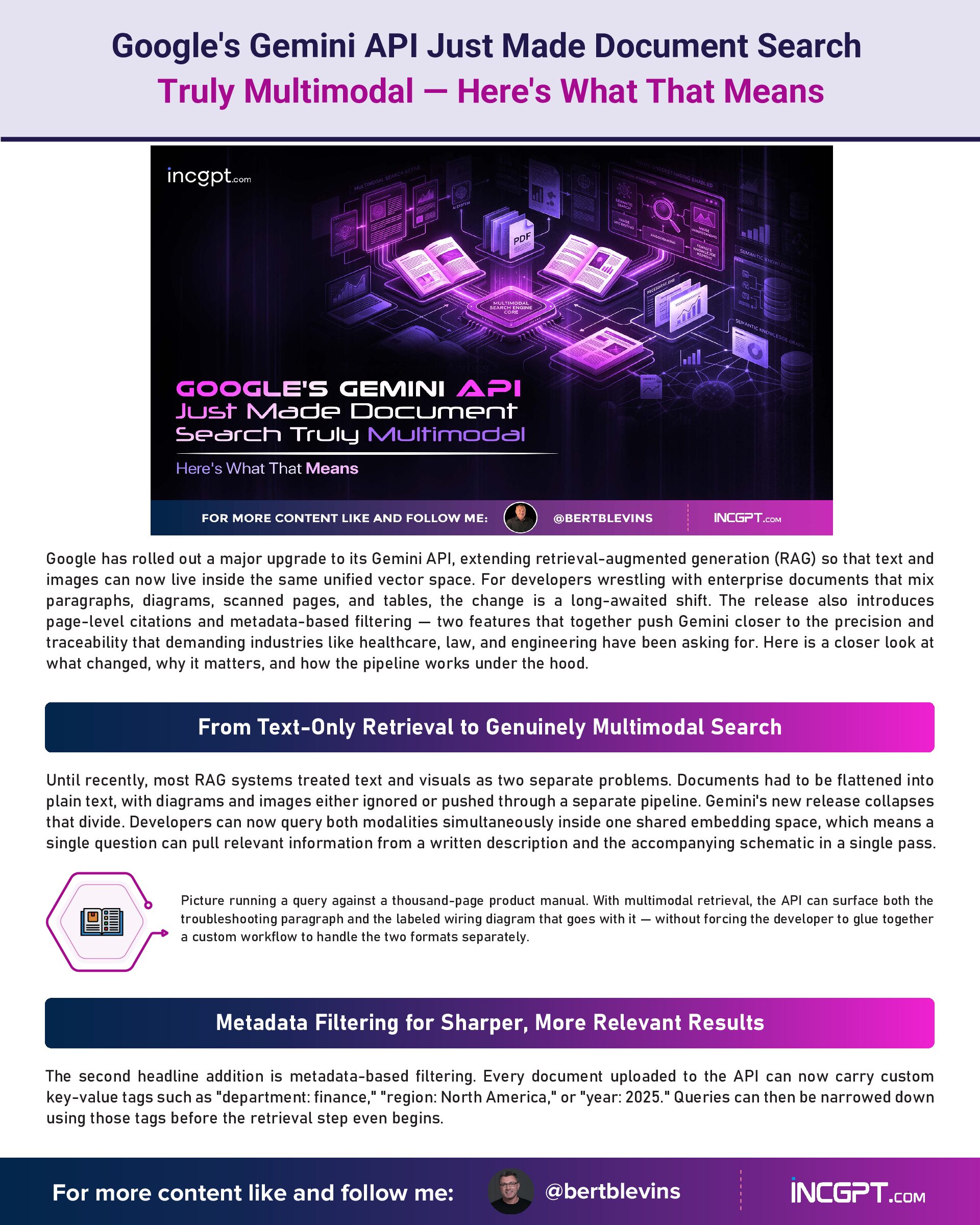
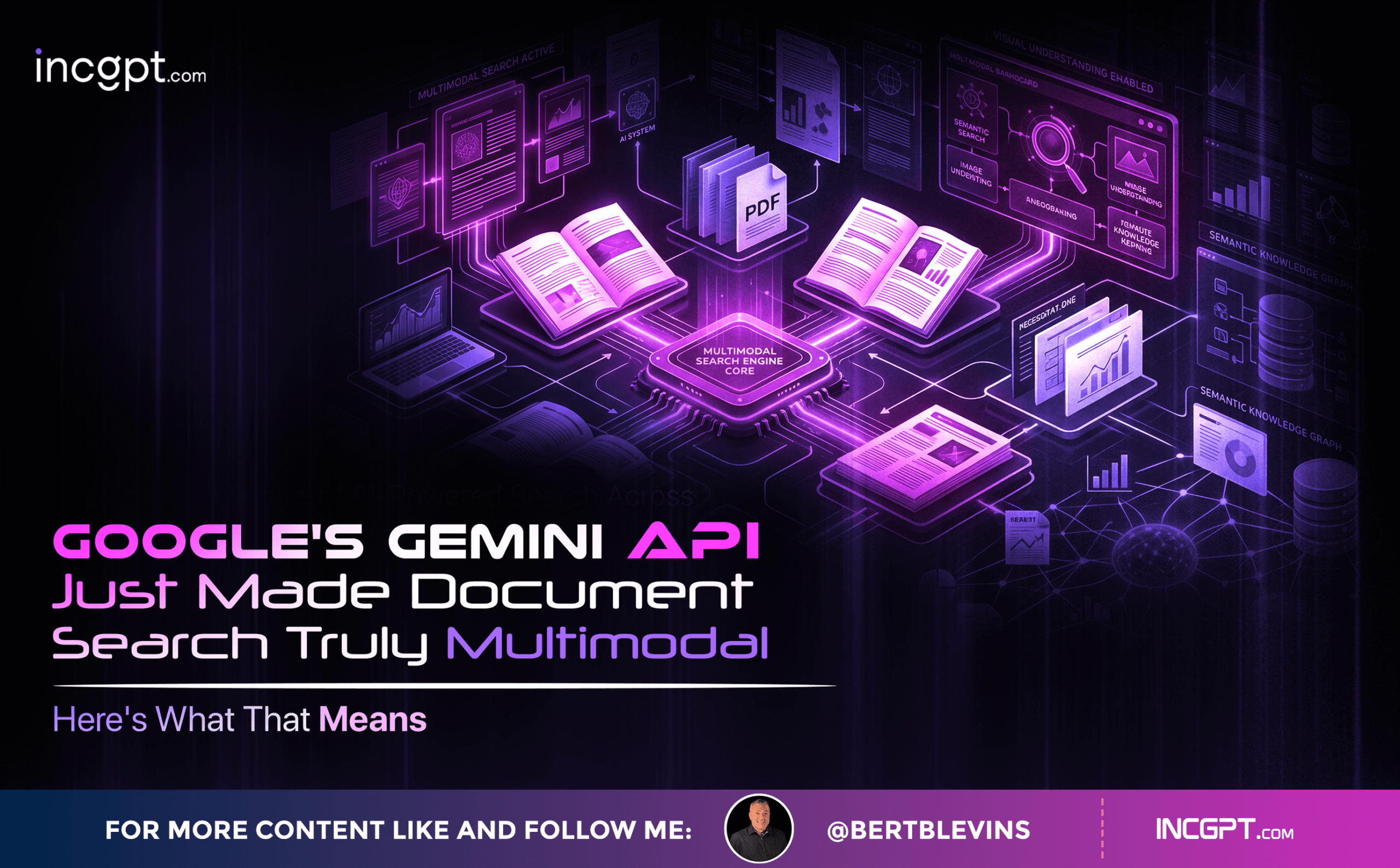
Google has just dropped a game-changing update for its Gemini API, and if you’re dealing with documents, this is huge. Let’s break down the key features and why this matters for industries like healthcare, law, and engineering.
Until now, AI tools separated text from visuals. You had one system for text, and a whole different system for images, diagrams, and tables. That meant if you were querying a product manual, you’d have to deal with text and images separately—until now.
Enter the new multimodal update. Google’s Gemini API now allows both text and images to live in the same unified vector space. This means you can ask a single question and pull data from written descriptions and diagrams in a single pass. Imagine asking about a troubleshooting issue, and having both the paragraph description and the labeled wiring diagram pop up—automatically.
But that’s not all. Gemini also introduced metadata-based filtering. Now, you can tag your documents—like “department: finance” or “region: North America”—and run queries to filter based on that metadata. This minimizes irrelevant results, saving time and cutting compute costs.
Another huge upgrade? Page-level citations. Now, when the API gives you an answer, it links directly to the page in the document where that information came from. This is a game-changer for industries like law and healthcare, where accountability and traceability are critical.
Under the hood, this update works with a five-step pipeline: documents are uploaded, chunked into smaller parts, converted into vectors, stored, and then queried. This unified retrieval process makes Gemini more powerful than ever—treating both text and visuals as equals.
So, whether you’re in engineering, healthcare, or financial services, this update will help you search documents in a way that’s faster, more precise, and traceable. With affordable pricing for both solo developers and enterprises, it’s time to embrace the future of document search with Google’s Gemini API.