Model Context Protocol (MCP)
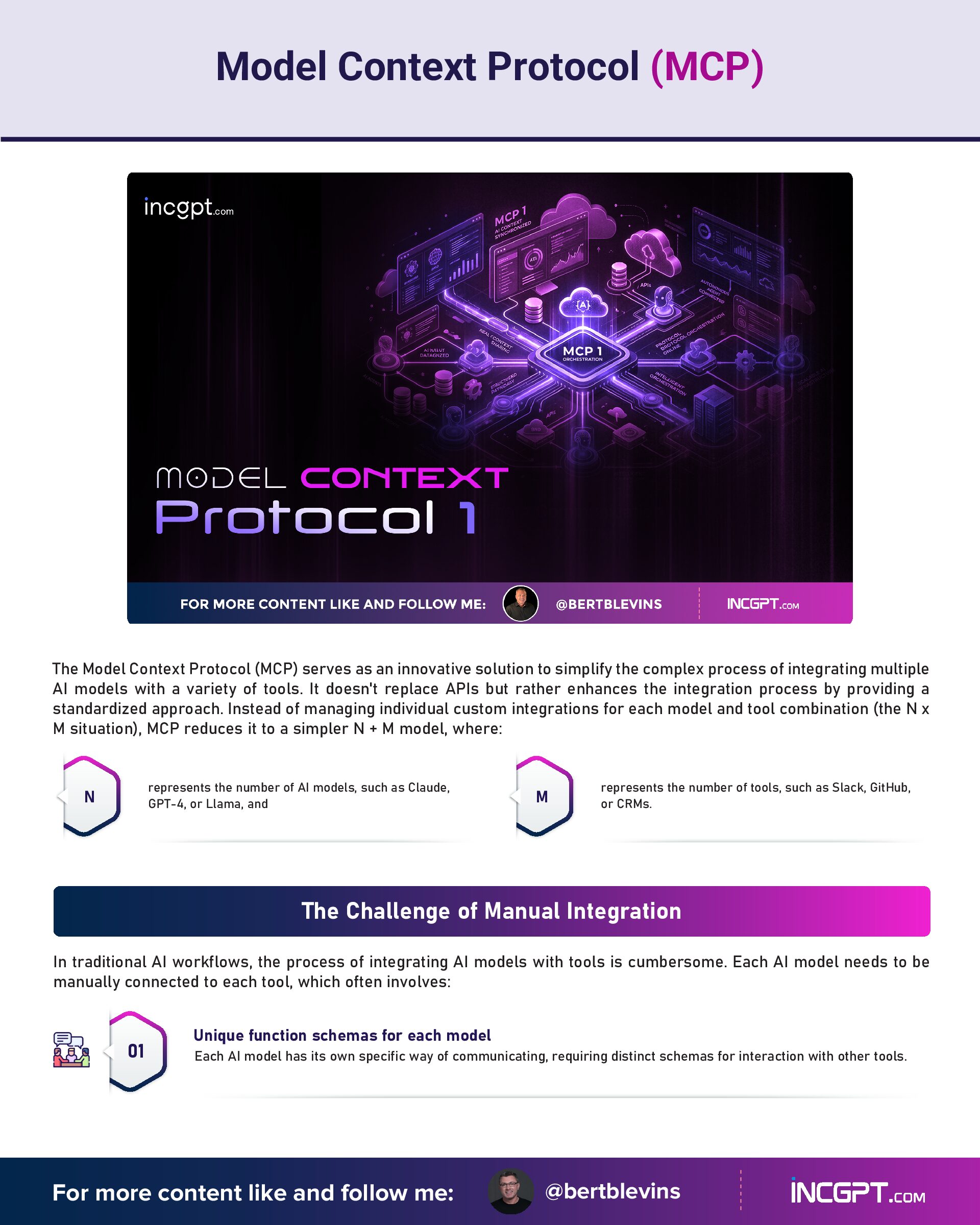
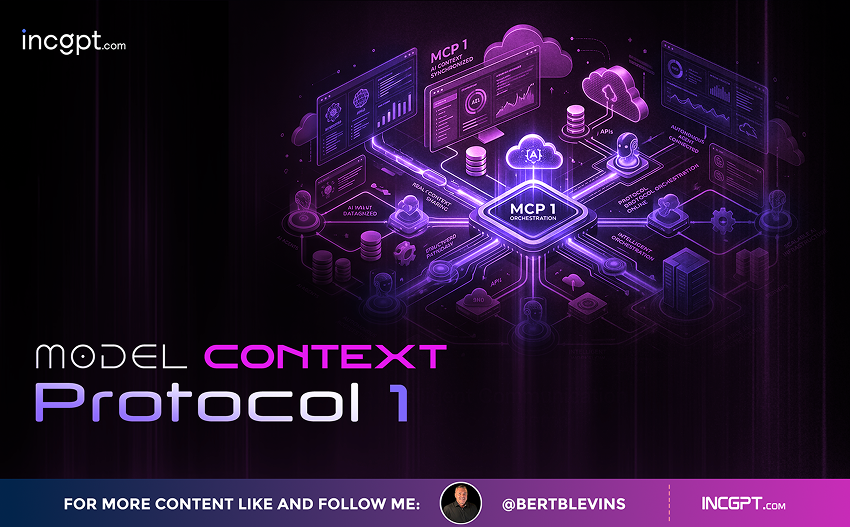
The Model Context Protocol (MCP) serves as an innovative solution to simplify the complex process of integrating multiple AI models with a variety of tools. It doesn’t replace APIs but rather enhances the integration process by providing a standardized approach. Instead of managing individual custom integrations for each model and tool combination (the N x M situation), MCP reduces it to a simpler N + M model, where:
- N represents the number of AI models, such as Claude, GPT-4, or Llama, and
- M represents the number of tools, such as Slack, GitHub, or CRMs.
The Challenge of Manual Integration
In traditional AI workflows, the process of integrating AI models with tools is cumbersome. Each AI model needs to be manually connected to each tool, which often involves:
- 1. Unique function schemas for each model: Each AI model has its own specific way of communicating, requiring distinct schemas for interaction with other tools.
- 2. Custom handler code per tool: For each tool, custom code is needed to ensure that the AI model can interact with it, which can be time-consuming and error-prone.
- 3. Context loss between service calls: As AI models switch between tools, they may lose valuable context, leading to errors or inconsistencies.
- 4. Starting from scratch with every integration: With each new tool or model, developers are forced to reinvent the wheel and re-create integration points from the ground up.
These issues make the integration process inefficient, error-prone, and difficult to scale.
How MCP Addresses These Challenges
MCP solves these problems by acting as a standardized protocol layer that sits above existing APIs. It simplifies integration and ensures smoother interactions by offering:
- 1. A single, persistent, bidirectional connection: MCP creates a continuous connection between AI models and tools, reducing the need for repeated handshakes or disjointed integrations.
- 2. Automatic context flow: Unlike traditional systems, where context can be lost between service calls, MCP maintains context across different tools and processes, ensuring that the AI model doesn’t lose track of ongoing tasks or conversations.
- 3. Runtime capability discovery: AI agents can dynamically detect and adapt to the capabilities of the tools they are interacting with, ensuring they know what actions to perform without hardcoded information.
- 4. AI agents that understand and navigate tools without custom schemas: Rather than needing bespoke schemas for each integration, MCP allows AI agents to operate with tools in a more generalized way, reducing the complexity of custom configurations.
To put it into perspective, REST APIs can be seen as highways that allow data to travel between services, but they are still bound by the need for custom navigation. In contrast, MCP acts as a standardized vehicle, equipped with the knowledge to navigate these highways efficiently, without needing a different driver for every journey.
When to Use MCP
MCP is particularly useful in scenarios where:
- Building multi-tool workflows: If you're working with five or more tools chained together, MCP provides a streamlined way to integrate them without creating custom integration points for each combination.
- Frequent changes in tools: If tools keep changing and you're tired of constantly updating your codebase to adapt to new versions or features, MCP abstracts these changes, reducing the maintenance burden.
- Dynamic capability discovery: If you need AI models to discover and interact with new capabilities at runtime, MCP ensures that the system can adapt to changes without needing manual configuration.
- Scaling to numerous integrations: As your workflow grows and you add dozens of integrations, MCP ensures that all tools can be seamlessly connected and coordinated.
- Centralized security layer: Instead of managing separate authentication mechanisms for each integration, MCP consolidates them into a single security layer, simplifying management and reducing the risk of errors.
Why MCP Matters
The Model Context Protocol (MCP) is an essential tool for simplifying the integration of AI models with a variety of tools and services. By providing a standardized protocol, it reduces the need for custom integrations, streamlines workflows, and minimizes the potential for errors. As AI systems continue to grow in complexity and scope, MCP enables efficient multi-tool interactions, helping organizations scale their workflows without being bogged down by the complexity of custom integrations.
Ultimately, MCP facilitates better communication between AI models and tools, boosts productivity, and reduces development time—helping businesses and developers focus on more important tasks rather than reinventing integration processes with each new tool or AI model.