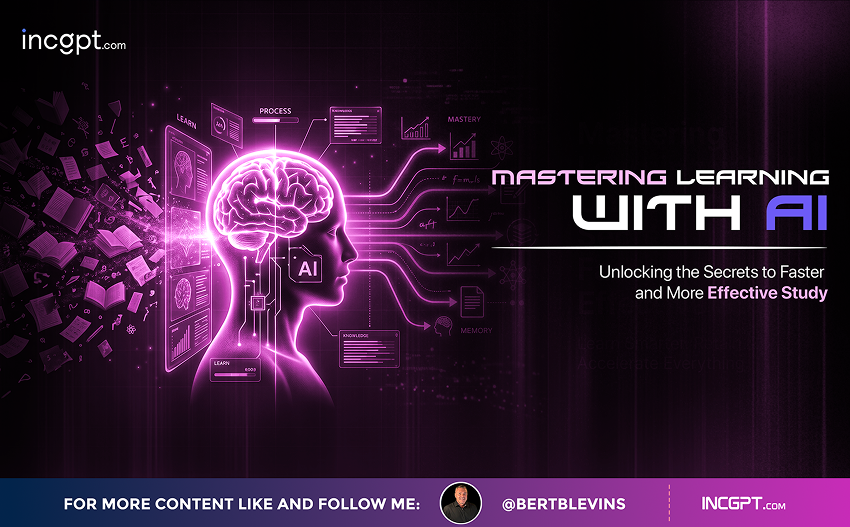
Mastering Learning with AI: Unlocking the Secrets to Faster and More Effective Study
The Future of Learning with AI
Artificial Intelligence (AI) has revolutionized many industries, but one of its most impactful roles is in education. As AI tools like ChatGPT and Google Gemini gain popularity, students and professionals alike are exploring how to use these technologies to enhance their learning process. However, a key challenge lies in determining when AI stops being a productivity boost and starts hindering genuine understanding. This article explores how AI can be leveraged for deeper, more efficient learning without losing the cognitive benefits of engaging directly with the material.
AI and the Changing Landscape of Education
AI has become an indispensable tool in modern education, with its potential to assist in tasks like note-taking, summarizing content, and generating study materials. However, the real challenge is to balance AI’s strengths with the need for critical thinking and active learning. As technology continues to advance, it’s crucial to harness the power of AI without letting it replace the vital process of engaging with information on a deeper cognitive level.
This article takes a look at how AI can be used effectively for study and learning. It will highlight strategies to incorporate AI tools into your study routine that will help you learn more efficiently, retain information better, and truly understand the concepts you’re studying.
AI Tools: Enhancing vs. Replacing Active Learning
The primary concern many educators have with AI is its potential to replace critical cognitive tasks, such as summarizing, note-taking, and thinking through complex problems. While AI tools excel at making tasks easier, they can also lead to passive learning if overused. The trick is to understand how to use AI to enhance your learning, rather than doing the thinking for you.
1. AI for Active Engagement: The Power of Handwritten Notes
One of the most powerful learning tools available is handwriting. Despite the convenience of digital note-taking, studies show that writing by hand helps deepen understanding and retention. By writing notes manually, you’re forced to engage with the material at a deeper level—paraphrasing, organizing thoughts, and processing information as you write.
This is where AI can play a role. Tools like the Onyx Boox Go 10.3 e-ink tablet can digitize handwritten notes, allowing you to retain the cognitive benefits of writing by hand while also making your notes accessible and easy to manage. By combining handwriting with AI, you can have the best of both worlds—active engagement with the material and digital organization.
2. Using AI to Digitize and Organize Notes
While handwritten notes are essential, digitizing your notes makes them easier to store, organize, and revisit. Once your notes are in a digital format, AI tools like Google Gemini can help organize and enhance them. You can ask AI to create key concept lists, summarize your notes, and highlight the most important information for study sessions. This takes away some of the time spent organizing and lets you focus on understanding the material.
- "Create a list of key concepts from my notes."
- "Organize my notes by topic, with definitions and explanations."
- "Generate a list of vocabulary words and their meanings."
By focusing on what matters most, you can accelerate your study time and improve your retention.
3. AI-Powered Flashcards for Efficient Review
AI can be particularly helpful in the creation of study materials, such as flashcards. Flashcards are a proven method of reinforcing memory through spaced repetition, a technique that encourages reviewing information over extended periods of time. Using AI, you can easily turn your notes into flashcards and review key terms, concepts, and definitions in preparation for exams.
For instance, you can ask AI to:
A precedent, not a curiosity
- "Create flashcards based on the vocabulary and definitions from my notes."
- "Generate a set of flashcards for the key concepts in chapter 4."
Using these flashcards regularly will ensure better long-term retention, as opposed to cramming all the information in a short time.
4. Simplifying Complex Concepts with AI
One of the challenges in learning is understanding complex concepts. Sometimes, even after multiple readings, certain topics remain unclear. In these situations, AI can help by breaking down difficult material into simpler terms and providing easy-to-understand explanations.
If you’re struggling with a particular concept, you can ask AI to:
- "Explain this concept like I’m a 5th grader."
- "Can you simplify this explanation and provide examples?"
- "Give me an analogy that makes this concept easier to understand."
This strategy makes abstract or complicated topics much more accessible, fostering a deeper understanding of the subject matter.
5. Using AI for Real-Time Feedback
While traditional learning environments provide limited opportunities for real-time feedback, AI can act as an on-demand tutor. By using AI to check your understanding as you study, you can identify gaps in knowledge and improve your grasp of concepts before you forget them. For example, after completing a section of reading or a practice exercise, you can ask AI:
- "Check if I understand this concept correctly."
- "Can you quiz me on the material I just studied?"
Real-time feedback allows you to adjust your learning strategies and ensure you’re on track.
6. Collaboration with AI for Deeper Learning
AI doesn’t have to be a solitary tool; it can be used to collaborate with other learners, enhancing the social aspect of learning. AI tools can help you organize study groups, share materials, and collaborate on projects. You can use platforms like ChatGPT to discuss topics with peers, ask questions, or even generate ideas for group assignments.
By using AI in collaboration with others, you can gain different perspectives on the material and refine your understanding through discussion. AI can also help manage group tasks, keep track of deadlines, and ensure that everyone stays on the same page.
7. Enhancing Writing Skills with AI Tools
Writing is an essential skill in academic and professional settings, and AI can help improve your writing process. AI writing tools can assist with grammar checks, clarity, style, and even structure. While it’s important to write the content yourself to maintain your cognitive engagement, AI can help polish your work once the initial draft is complete.
You can prompt AI to:
- "Check my grammar and suggest improvements."
- "Help me structure my essay better."
- "Provide suggestions for a stronger thesis statement."
Using AI to fine-tune your writing ensures that you’re producing high-quality work without the time-consuming task of editing every detail manually.
Conclusion: Striking the Balance Between AI and Active Learning
AI has the potential to revolutionize how we learn, but it’s essential to use it thoughtfully. By leveraging AI to enhance note-taking, organize materials, create study aids, and receive feedback, you can improve your learning experience. However, it’s crucial to maintain a balance between using AI as a tool and engaging with the material actively. Whether you’re a student or a professional, the key is to make AI work for you, not replace your critical thinking and cognitive effort. When used wisely, AI can help you learn faster, retain more information, and gain a deeper understanding of the subjects you care about.