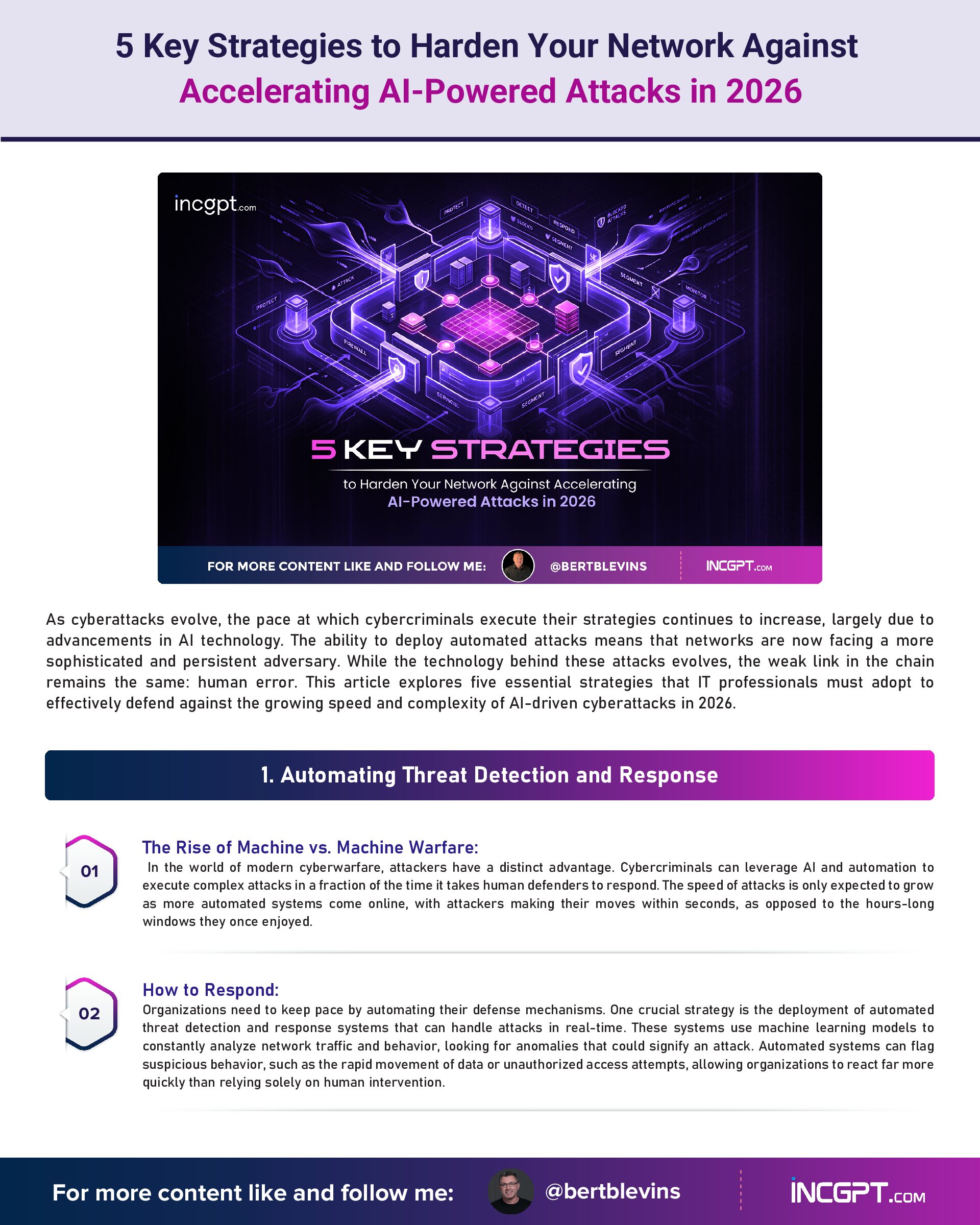
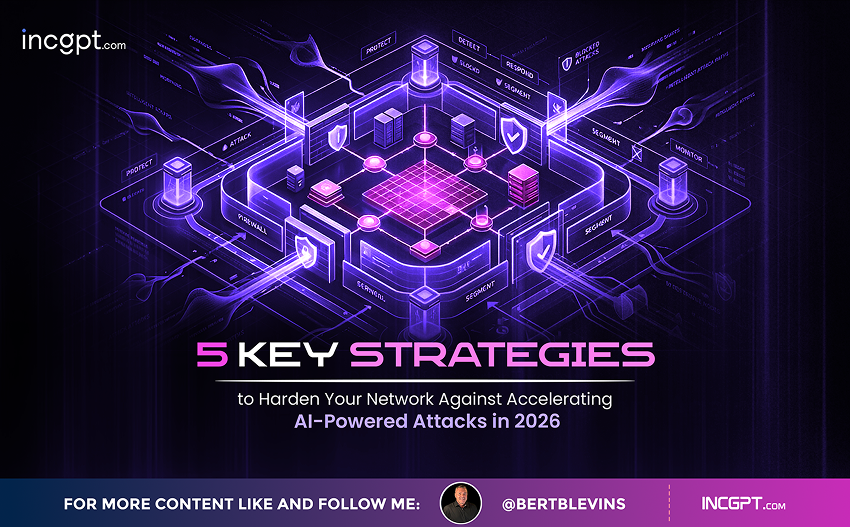
5 Key Strategies to Harden Your Network Against Accelerating AI-Powered Attacks in 2026
As cyberattacks evolve, the pace at which cybercriminals execute their strategies continues to increase, largely due to advancements in AI technology. The ability to deploy automated attacks means that networks are now facing a more sophisticated and persistent adversary. While the technology behind these attacks evolves, the weak link in the chain remains the same: human error. This article explores five essential strategies that IT professionals must adopt to effectively defend against the growing speed and complexity of AI-driven cyberattacks in 2026.
1. Automating Threat Detection and Response
The Rise of Machine vs. Machine Warfare:
In the world of modern cyberwarfare, attackers have a distinct advantage. Cybercriminals can leverage AI and automation to execute complex attacks in a fraction of the time it takes human defenders to respond. The speed of attacks is only expected to grow as more automated systems come online, with attackers making their moves within seconds, as opposed to the hours-long windows they once enjoyed.
How to Respond:
Organizations need to keep pace by automating their defense mechanisms. One crucial strategy is the deployment of automated threat detection and response systems that can handle attacks in real-time. These systems use machine learning models to constantly analyze network traffic and behavior, looking for anomalies that could signify an attack. Automated systems can flag suspicious behavior, such as the rapid movement of data or unauthorized access attempts, allowing organizations to react far more quickly than relying solely on human intervention.
2. Strengthening Human Defenses: Training and Awareness
The Human Element Remains a Target:
While machines may execute attacks faster than ever, the human element continues to be the weakest link in the network’s defense. Cybercriminals increasingly use social engineering tactics, such as voice-based phishing or malicious advertisements, to gain access to systems. These types of attacks prey on human error, often bypassing even the most advanced technological defenses.
How to Respond:
Training is the frontline defense against these threats. IT workers should undergo regular training that includes simulations of phishing, spear-phishing, and social engineering attacks. Employees, particularly those in IT help desks, must be well-versed in recognizing these tactics and know how to respond. This includes being vigilant about unexpected MFA reset requests, unauthorized login attempts, or requests for sensitive data from unfamiliar sources. By building a cybersecurity-aware workforce, organizations can greatly reduce the success rate of human-targeted attacks.
3. Securing Backup and Recovery Systems
Targeting Recovery Capabilities:
One of the most damaging strategies used by attackers today is targeting backup systems. Ransomware groups, for instance, no longer just encrypt files—they also destroy recovery tools to ensure their attacks cannot be reversed. Virtualization platforms, hypervisor datastores, and cloud storage are increasingly becoming the focus of these attacks, rendering entire virtual infrastructures useless.
How to Respond:
To prevent the destruction of recovery capabilities, it is essential to decouple backup environments from the corporate Active Directory domain. Implementing immutable storage for backups is another critical step, ensuring that even if the primary systems are compromised, backups remain untouched. Additionally, ensuring that backup systems have restricted access and are monitored regularly can significantly reduce the risk of them being targeted by attackers.
4. Advanced Threat Detection and Behavior-Based Models
The Speed of Exploitations:
The time between a system being exploited and a patch being issued by vendors is shrinking. In some cases, cybercriminals can exploit zero-day vulnerabilities within just a few days, making traditional patch management strategies inadequate in today’s fast-paced threat landscape.
How to Respond:
Advanced threat detection models are essential in this context. Instead of relying solely on signature-based detection, organizations should implement behavior-based detection systems. These models flag anomalous activities based on deviations from established baselines, which helps in identifying both known and unknown threats. Additionally, organizations should extend their log retention policies well beyond the standard 90-day windows to ensure that even if a breach goes undetected initially, forensic evidence is available for investigation later.
5. Hardening Identity Management and Continuous Verification
Identity as the New Perimeter:
With the growing use of cloud services and software-as-a-service (SaaS) applications, identity management has become the new perimeter for network security. Traditional methods of securing a network perimeter, like firewalls, are no longer sufficient when attackers are able to bypass them through compromised credentials or insider threats.
How to Respond:
To strengthen identity security, organizations should shift from relying solely on password rotations and basic MFA to continuous identity verification. This involves using advanced identity management solutions that monitor user behaviors in real-time and flag any anomalous activities that may indicate a compromised account. This also applies to third-party vendors and partners—ensuring that their access to sensitive systems is continuously monitored and controlled.
Conclusion
As cybercriminals continue to leverage AI to launch faster and more sophisticated attacks, organizations must adopt a multi-layered approach to cybersecurity. This includes automating threat detection, training employees to recognize and respond to attacks, securing backup systems, implementing advanced threat detection models, and focusing on continuous identity verification. While AI-driven attacks will undoubtedly become more common in the years ahead, a proactive, comprehensive defense strategy can significantly mitigate the risks posed by these new threats. The fight against cybercrime in 2026 and beyond requires both advanced technology and a human-centric approach to security, ensuring that attackers are held at bay.