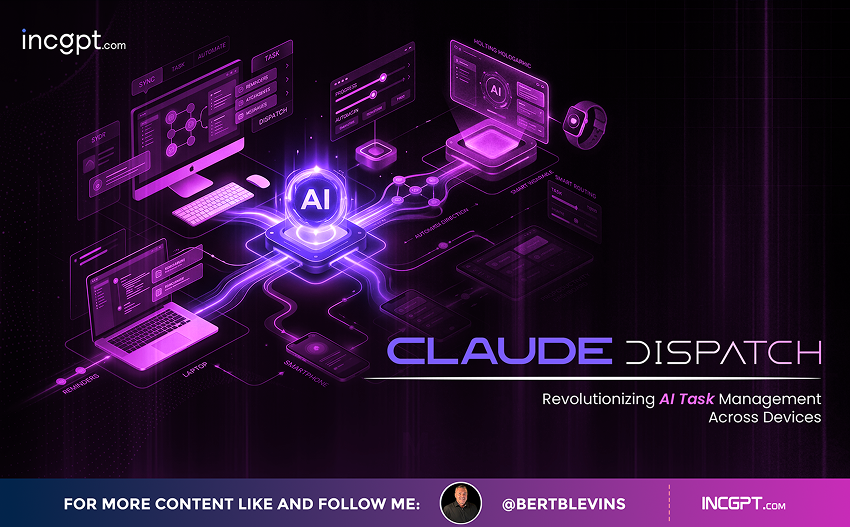
Claude Dispatch: Revolutionizing AI Task Management Across Devices
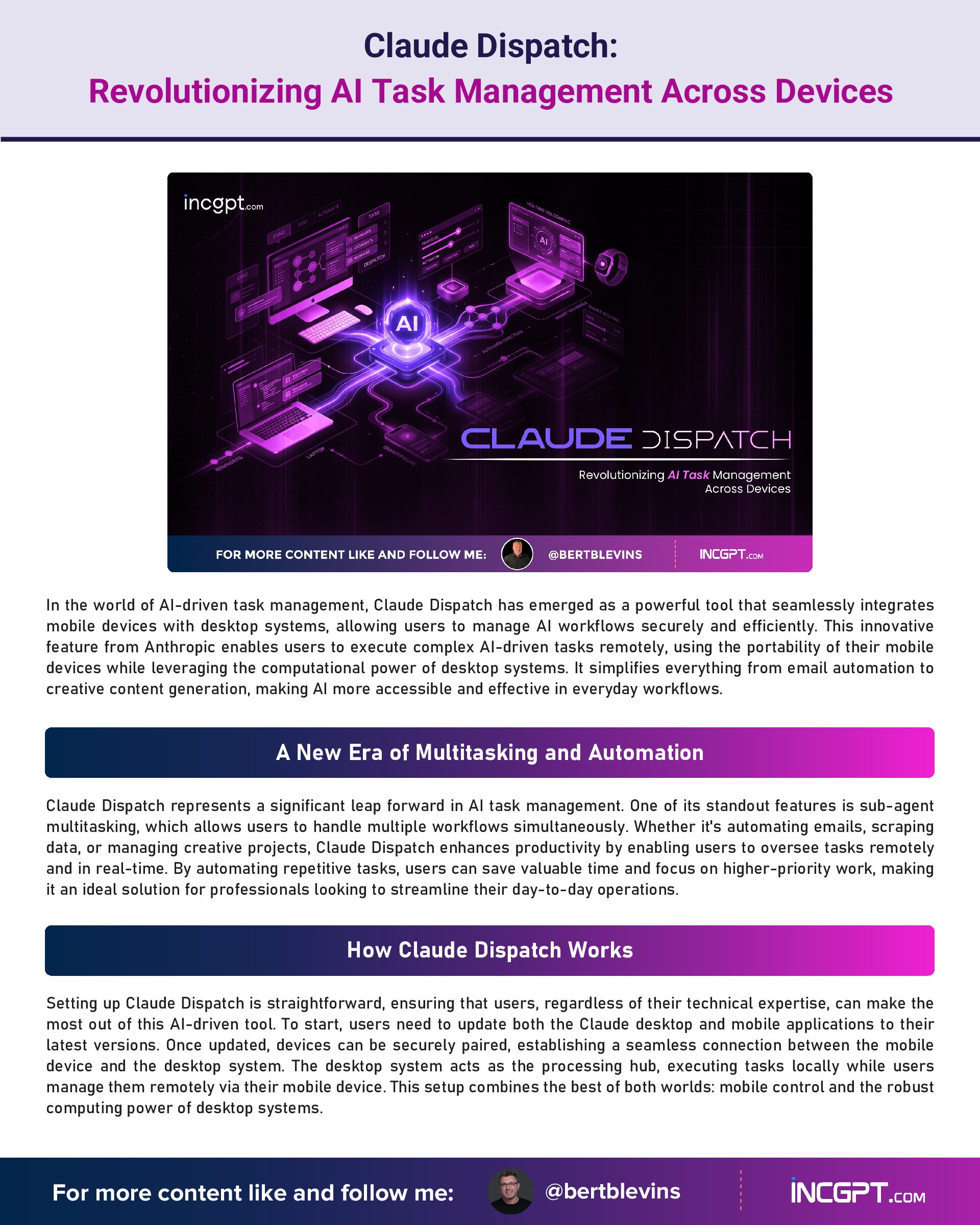
In the world of AI-driven task management, Claude Dispatch has emerged as a powerful tool that seamlessly integrates mobile devices with desktop systems, allowing users to manage AI workflows securely and efficiently. This innovative feature from Anthropic enables users to execute complex AI-driven tasks remotely, using the portability of their mobile devices while leveraging the computational power of desktop systems. It simplifies everything from email automation to creative content generation, making AI more accessible and effective in everyday workflows.
A New Era of Multitasking and Automation
Claude Dispatch represents a significant leap forward in AI task management. One of its standout features is sub-agent multitasking, which allows users to handle multiple workflows simultaneously. Whether it’s automating emails, scraping data, or managing creative projects, Claude Dispatch enhances productivity by enabling users to oversee tasks remotely and in real-time. By automating repetitive tasks, users can save valuable time and focus on higher-priority work, making it an ideal solution for professionals looking to streamline their day-to-day operations.
How Claude Dispatch Works
Setting up Claude Dispatch is straightforward, ensuring that users, regardless of their technical expertise, can make the most out of this AI-driven tool. To start, users need to update both the Claude desktop and mobile applications to their latest versions. Once updated, devices can be securely paired, establishing a seamless connection between the mobile device and the desktop system. The desktop system acts as the processing hub, executing tasks locally while users manage them remotely via their mobile device. This setup combines the best of both worlds: mobile control and the robust computing power of desktop systems.
Why Choose Claude Dispatch Over Other AI Tools?
Claude Dispatch stands out when compared to other AI management platforms, such as OpenClaw, for several reasons:
- Enhanced Security: One of the primary concerns with AI task management is security, particularly with sensitive data. Claude Dispatch addresses this by executing tasks locally on the desktop system, reducing the risk of credential leaks and unauthorized access. Additionally, the platform uses sandboxing, further isolating sensitive operations to ensure data remains protected.
- Predictable Pricing: Unlike pay-per-use platforms like OpenClaw, Claude Dispatch offers a flat subscription pricing model. This means that users can enjoy predictable costs, which is especially beneficial for businesses or individuals managing high volumes of tasks. The subscription model eliminates the unpredictability of usage-based fees, making it easier to plan and budget.
- User-Friendly Interface: The intuitive design of Claude Dispatch ensures accessibility for users with varying technical expertise. Whether you're an experienced AI user or someone new to automation, Claude Dispatch’s straightforward setup and easy-to-navigate interface make it simple to integrate into any workflow.
Practical Applications of Claude Dispatch
Claude Dispatch is designed to cater to a variety of professional and business needs, making it a versatile tool for automating and managing workflows. Some key applications include:
- Task Automation: Claude Dispatch allows users to automate repetitive tasks such as email sorting, lead generation, and data scraping. This feature can significantly reduce the manual effort involved in these processes, allowing teams to focus on more strategic work.
- Mobile Workflow Management: One of the most innovative aspects of Claude Dispatch is the ability to manage workflows remotely via mobile devices. Whether you're on the go or away from your desktop, you can still monitor and control your AI-driven tasks, ensuring that no progress is missed.
- Creative Assistance: For those in creative fields, Claude Dispatch can be used to assist with tasks such as generating thumbnails, organizing content, and even helping with media and design projects. By automating these processes, creatives can focus more on refining their ideas and less on repetitive tasks.
Security and Cost Efficiency
Claude Dispatch places a strong emphasis on both security and cost efficiency, two key concerns for users managing AI tasks. The platform’s approach to executing tasks locally, rather than relying on cloud-based systems, minimizes the risk of data breaches and protects sensitive information. Additionally, the flat subscription pricing model ensures that users can manage their costs effectively, making Claude Dispatch an attractive option for high-volume users.
Future Developments for Claude Dispatch
As with all technology, Claude Dispatch is expected to evolve to meet the changing needs of its users. Anthropic has outlined plans for future updates that aim to expand the tool’s functionality and enhance the user experience. Among these updates is the potential integration with platforms like Telegram, further increasing accessibility and broadening the scope of use. With regular updates and continuous improvements, Claude Dispatch is well-positioned to remain a leading solution in AI task management.
Empowering Professionals and Enhancing Productivity
Claude Dispatch is designed not only for efficiency but also for empowering users. By streamlining workflows and automating mundane tasks, it frees up valuable time for professionals to focus on the work that requires creativity and critical thinking. With its secure, cost-effective, and intuitive approach, Claude Dispatch enables users to enhance productivity while maintaining control over their AI-driven workflows.
In conclusion, Claude Dispatch is transforming the way we interact with AI, making it easier to manage and execute tasks across multiple devices. Whether you’re looking to automate tasks, manage workflows remotely, or streamline creative processes, Claude Dispatch offers a comprehensive solution that addresses the needs of modern professionals. With its emphasis on security, predictability, and usability, Claude Dispatch is poised to become an essential tool in AI task management for businesses and individuals alike.