Microsoft's Copilot Contradiction: Selling AI as Essential While Labeling It a Toy
The AI Assistant That Powers Your Workday Has a Surprising Disclaimer
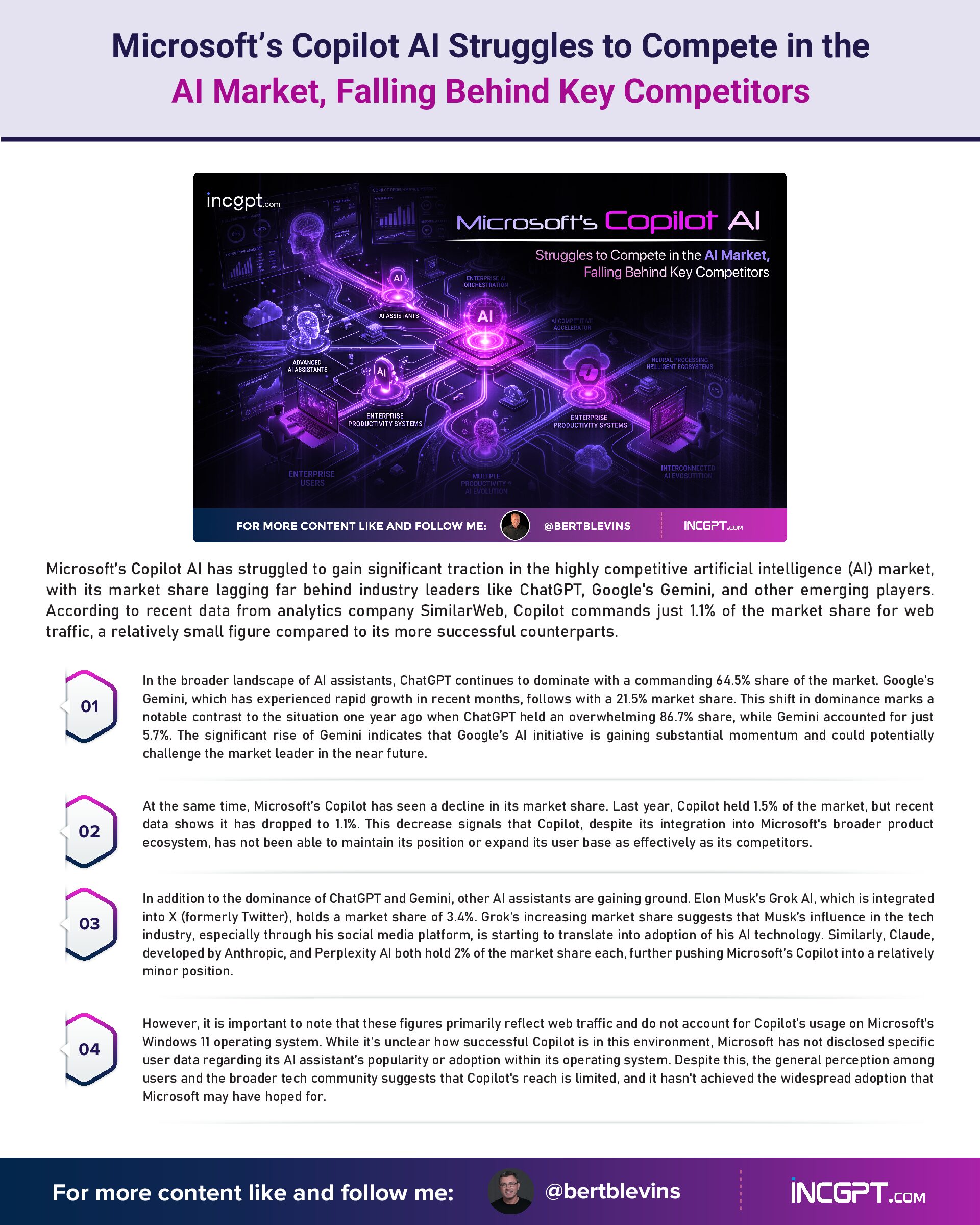
For the past two years, Microsoft has aggressively positioned Copilot as the backbone of modern productivity. The AI assistant is embedded into Windows, Edge, Word, Excel, Outlook, Teams, and virtually every corner of the Microsoft ecosystem. The company’s marketing has left little room for ambiguity — Copilot is your intelligent co-worker, the tool that will reshape how you get things done. Billions of dollars in infrastructure, advertising, and product development have been poured into making this vision a reality.
So it came as a jarring surprise when users recently noticed a particular line buried in the Microsoft Copilot Terms of Use. The document, which was last updated in late 2025, states plainly that Copilot is intended for entertainment purposes only. It warns users that the tool can make mistakes, may not work as intended, and should not be relied on for important advice. Users are told they operate Copilot entirely at their own risk.
The disconnect between what Microsoft sells and what Microsoft’s legal team is willing to stand behind has sparked widespread criticism across the tech community.
A Legal Shield Disguised as a Disclaimer
To be fair, Microsoft is not the only company playing this game. Nearly every major AI provider includes some version of a liability disclaimer in its terms of service. OpenAI, Google, and xAI all warn users that their AI tools are probabilistic in nature and can produce inaccurate or misleading outputs. These disclaimers exist for good reason — large language models do hallucinate, they do generate confidently wrong answers, and they are not substitutes for professional advice in fields like medicine, law, or finance.
But the language Microsoft chose goes further than most. Calling Copilot an entertainment product is not the same as saying “verify your results” or “use with caution.” It fundamentally reframes what the tool is supposed to be. And that reframing directly contradicts everything Microsoft has communicated through its product strategy and marketing over the past several years.
This is the same Copilot that sits inside enterprise solutions used by Fortune 500 companies. The same assistant that Microsoft pitches to businesses as a way to draft reports, analyze data, summarize meetings, and manage workflows. The suggestion that all of this is merely entertainment feels less like a genuine product description and more like a carefully constructed legal escape hatch.
The Internet Responds With Predictable Frustration
The reaction online has been a mix of disbelief, mockery, and legitimate frustration. Users and commentators have been quick to point out the absurdity of embedding an AI tool deep into professional software and then quietly disclaiming any responsibility for its output. Several pointed observations have gone viral, with people noting that Microsoft simultaneously tells users Copilot is the future of productivity while also insisting it should not be trusted with anything that actually matters.
Some observers have interpreted the disclaimer as a preemptive legal response to the growing wave of AI-related lawsuits. In early 2026, Google faced a high-profile lawsuit alleging that its Gemini chatbot played a role in a user’s death. As AI tools become more integrated into daily life and more people rely on them for guidance, the legal exposure for these companies grows significantly. Microsoft’s entertainment-only label may be less about defining the product and more about insulating the company from liability when things inevitably go wrong.
The Deeper Problem: Trust Erosion
Beyond the legal maneuvering, this situation exposes a more fundamental issue — the growing gap between AI marketing and AI reality. For years, tech companies have promoted AI assistants as transformative tools that will revolutionize work, creativity, and decision-making. The rhetoric has been bold, sometimes bordering on grandiose. But when it comes time to stand behind that rhetoric in a legal document, the tone shifts dramatically.
This dual messaging erodes user trust. People who have invested time learning Copilot, integrated it into their workflows, and even paid premium prices for Copilot-enhanced subscriptions are now being told — in the fine print — that the tool they depend on is not actually designed for dependable use. It raises a legitimate question: if Copilot is just entertainment, why is it so deeply embedded into professional tools, and why is it so difficult to remove?
That last point has become a particular source of frustration for Windows users. Copilot is baked into the operating system in ways that make it nearly impossible to fully disable. Only recently did Microsoft begin allowing administrators to uninstall Copilot on Windows 11 Pro, Enterprise, and Education editions. For individual users on standard Windows installations, the AI assistant remains a persistent presence — one that Microsoft now officially classifies as non-essential entertainment.
What This Means for the Future of AI Products
Microsoft’s Copilot disclaimer is not an isolated incident. It reflects a broader tension that the entire AI industry is grappling with as these tools move from experimental novelty to mainstream integration. The core challenge is this: AI companies want to sell their products as powerful and indispensable, but they are not yet willing (or able) to guarantee that those products will perform reliably in high-stakes situations.
This creates an uncomfortable middle ground. Users are encouraged to adopt AI tools for serious work but are simultaneously warned not to take the results seriously. The burden of verification falls entirely on the user, even as the tools are marketed as time-saving automation that reduces the need for manual oversight.
For enterprise customers paying significant licensing fees for Microsoft 365 Copilot, this dynamic is especially problematic. Organizations are being asked to invest in a productivity tool that its own creator refuses to vouch for in legal terms. That tension will likely intensify as AI capabilities expand and as regulatory scrutiny of AI products increases across multiple jurisdictions.
The Bottom Line
Microsoft’s Copilot terms of use may be standard legal boilerplate in spirit, but the specific language — entertainment purposes only — lands differently when attached to a product that has been marketed as a serious professional tool. The disclaimer has succeeded in doing one thing Microsoft probably didn’t intend: reminding everyone that despite the hype, AI assistants remain fundamentally unreliable, and the companies building them know it better than anyone.
The question now is whether users and businesses will continue buying into the vision, or whether the growing gap between marketing promises and legal reality will start to chip away at adoption. Either way, the message from Microsoft’s own legal team is clear — no matter how deeply Copilot is woven into your workflow, you’re on your own when it counts.