Why Businesses Should Be Cautious About AI Browsers: Risks and Recommendations
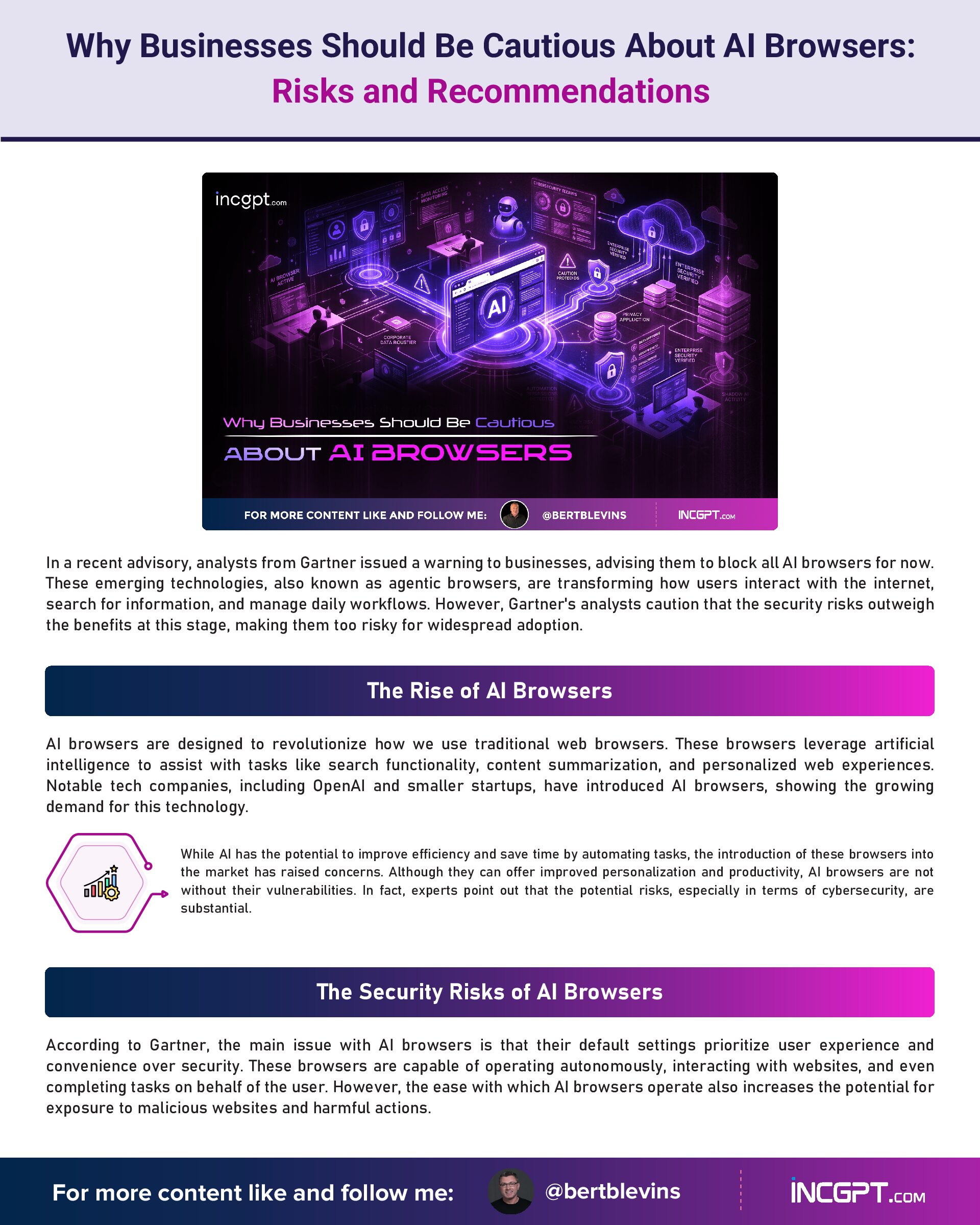
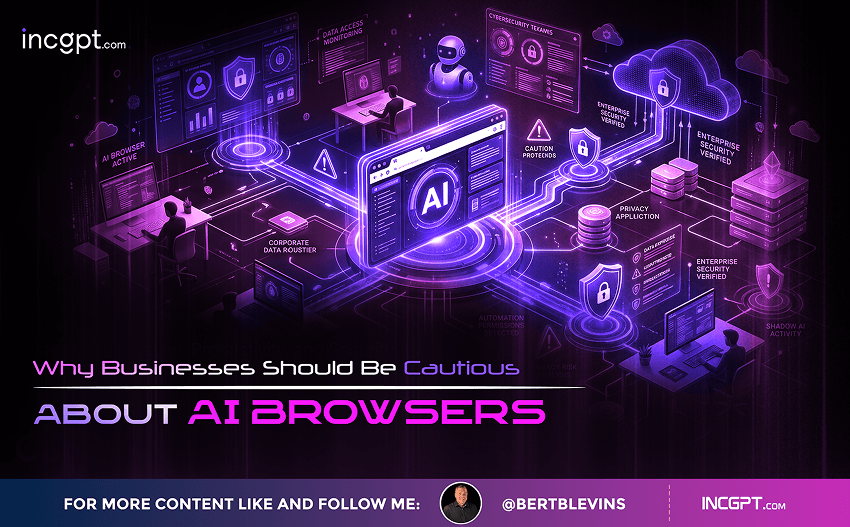
In a recent advisory, analysts from Gartner issued a warning to businesses, advising them to block all AI browsers for now. These emerging technologies, also known as agentic browsers, are transforming how users interact with the internet, search for information, and manage daily workflows. However, Gartner’s analysts caution that the security risks outweigh the benefits at this stage, making them too risky for widespread adoption.
The Rise of AI Browsers
AI browsers are designed to revolutionize how we use traditional web browsers. These browsers leverage artificial intelligence to assist with tasks like search functionality, content summarization, and personalized web experiences. Notable tech companies, including OpenAI and smaller startups, have introduced AI browsers, showing the growing demand for this technology.
While AI has the potential to improve efficiency and save time by automating tasks, the introduction of these browsers into the market has raised concerns. Although they can offer improved personalization and productivity, AI browsers are not without their vulnerabilities. In fact, experts point out that the potential risks, especially in terms of cybersecurity, are substantial.
The Security Risks of AI Browsers
According to Gartner, the main issue with AI browsers is that their default settings prioritize user experience and convenience over security. These browsers are capable of operating autonomously, interacting with websites, and even completing tasks on behalf of the user. However, the ease with which AI browsers operate also increases the potential for exposure to malicious websites and harmful actions.
For instance, an AI-powered chatbot could inadvertently interact with a harmful website, unknowingly exposing the user or their data to potential threats. In a business context, an employee might unknowingly submit sensitive corporate information to an AI assistant, unaware of where the data is stored and whether it is protected. If the AI’s cloud-based backend is not properly secured, a data breach could occur, putting the organization at risk.
Additionally, the efficiency offered by AI browsers might encourage employees to automate tasks such as completing cybersecurity training. While automation can boost productivity, it can also lead to employees bypassing learning opportunities or unintentionally ignoring security protocols.
Why Businesses Should Take Action
As the use of AI browsers grows, security experts warn of increasing cybersecurity risks. These browsers may introduce new challenges, including prompt injection attacks, the risk of personal data theft, and heightened surveillance. Given that AI browsers are still a relatively new and untested technology, it is crucial for businesses to assess whether the potential benefits outweigh the security risks.
Gartner recommends that businesses conduct thorough risk assessments of AI solutions and any related backend systems before considering their adoption. These audits can help determine whether AI browsers present an acceptable security risk. In most cases, the answer is likely to be no, as the risks are still not fully understood and the technology remains in its early stages.
If the security risks are deemed too great, Gartner advises that businesses block the use of AI browsers entirely. However, even if organizations decide to allow some use of AI-powered tools, they should provide employees with training to ensure they understand the risks involved. This includes educating staff on the importance of safeguarding sensitive information when interacting with AI-driven services.
A Balanced Approach
While Gartner’s advisory calls for caution, experts acknowledge that a blanket ban on AI browsers may not be a sustainable long-term strategy. Javvad Malik, lead security awareness advocate at KnowBe4, notes that the focus should be on conducting risk assessments to evaluate the specific AI services powering these browsers. This allows for more measured and controlled adoption of the technology while maintaining essential security measures.
In conclusion, while AI browsers offer exciting new possibilities, businesses should carefully consider the security implications before integrating them into their workflows. Security must remain the top priority, and until the risks associated with AI browsers are fully understood, companies should err on the side of caution.