AI Resources

Explore expert
AI articles & resources

Practical AI insights, guides, strategies, and technical resources to help you understand and apply artificial intelligence across identity, security, and automation.

5 Key Strategies to Harden Your Network Against Accelerating AI-Powered Attacks in 2026

As cyberattacks evolve, the pace at which cybercriminals execute their strategies continues to increase, largely due to advancements in AI technology. The ability to deploy automated attacks means that networks are now facing a more sophisticated and persistent adversary. While the technology behind these attacks evolves, the weak link in the chain remains the same: human error. This article explores five essential strategies that IT professionals must adopt to effectively defend against the growing speed and complexity of AI-driven cyberattacks in 2026.

10 Proven Strategies to Get Your Content Featured in AI-Generated Results

With AI tools like Google AI Overviews, ChatGPT, and Grok becoming more integrated into how we access information, optimizing your content for visibility has never been more crucial. As these systems increasingly pull from web content to generate responses, featured snippets, summaries, and recommendations, it’s essential to refine your approach to SEO and content structure. By combining traditional SEO best practices with a focus on how AI models parse and assess content, you can significantly increase your chances of getting featured in AI-generated outputs.

AI Agents Are Entering Their Rebuild Era as Enterprises Confront the Reliability Problem

The first wave of enterprise AI agents was about speed. Get something working, get it in front of users, and prove the technology could do real work. That phase is ending. As agents move out of demos and into day-to-day production, a less glamorous question has taken over the conversation: can you actually depend on them? For a growing number of organizations, the honest answer has been no, at least not yet, and that realization is pushing the entire field into a rebuilding phase.

AI Creativity – More Predictable Than Human Thought

The world of artificial intelligence (AI) has made tremendous advancements in recent years, especially with the advent of Large Language Models (LLMs) such as Gemini, GPT, and Llama. These models have been heralded for their ability to produce highly creative outputs that mimic human-like thought processes. However, a new study reveals a surprising limitation: while LLMs can generate seemingly creative ideas, their outputs are often more predictable and less diverse than human thought. This paradox of AI creativity is reshaping how we view the potential of AI in fields that demand originality and innovation, such as art, problem-solving, and brainstorming.

AI Has Broken the Way We Score Cyber Threats — and the Industry Is Only Now Catching Up

For decades, threat intelligence teams have leaned on a simple intuition: the more skilled the attacker, the more dangerous they are. Frameworks were built around that assumption, sorting adversaries by the breadth of techniques they could pull off and the sophistication of the tools they wielded. New research suggests that intuition no longer holds. Artificial intelligence has severed the old link between an attacker’s personal skill and the damage they can actually do — and the scoring models the industry relies on are quietly failing as a result.

AI Learning Paths for All Ages – Unlocking Career Potential Across Generations

Artificial Intelligence (AI) is no longer a futuristic concept; it’s a current driver of innovation and productivity across industries. However, the speed of technological change can be overwhelming, especially for those looking to integrate AI into their career development. The key to staying competitive in the AI-powered workforce lies in learning how to leverage this powerful tool, no matter your age or career stage. To address this, we’ve crafted a set of tailored AI learning guides designed for four different market segments: New College Graduates (18-24), Early to Mid-Career Professionals (25-39), Mid-Career Switchers (40-54), and Displaced Older Workers (55+). Each guide is structured to accommodate the specific needs, motivations, time constraints, and learning preferences of these groups, while fostering the necessary skills to excel in an AI-driven economy.

AI ROI and the AI Impact Grid

The AI ROI Problem The AI return on investment (ROI) issue is not about a lack of intelligence in AI systems; rather, it stems from the gap between the insights AI provides and the actions businesses take as a result. This is often referred to as the “gap between intelligence and action.” In traditional AI workflows, the process tends to flow as follows:

AI ROI and the AI Touch and Integration Framework

Let’s dive into the world of AI and why getting a good return on investment (ROI) from it can be tricky. We’ll explore the common challenges and introduce a helpful tool called the AI Touch and Integration Framework that can guide businesses in making the most of their AI efforts. I’ll explain everything step by step, so even if you’re new to these concepts, it should all make sense.

AI-Powered Customer Data Insights – Revolutionizing Retrieval and Analysis

AI-Powered Personalized Product Recommendations – Revolutionizing E-Commerce

AI-Powered Precision – in Lead Qualification and Scoring

AI-Powered Stock Optimization – Revolutionizing Inventory Management with MCP and RFID

AI’s Perilous Adolescence – Dario Amodei’s Stark Warning About the Imminent Risks and Need for Control

In a deeply reflective and sobering essay, Anthropic CEO Dario Amodei has described the current stage of artificial intelligence (AI) development as the “adolescence” of a transformative technology—one characterized by explosive growth, unpredictable behavior, and escalating dangers that society is ill-prepared to address. Drawing on the analogy of a teenager testing boundaries, Amodei argues that AI is approaching superhuman capabilities, potentially within the next 1 to 2 years, while regulatory and societal safeguards struggle to keep up.

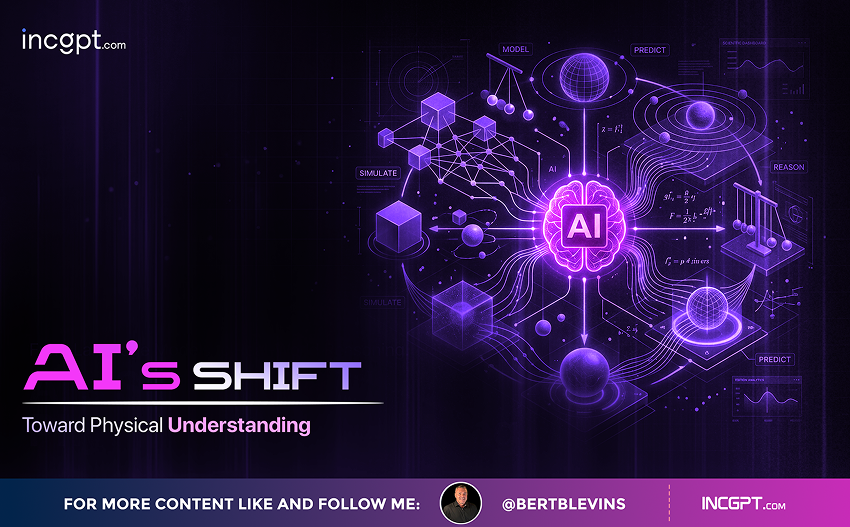
AI’s Shift Toward Physical Understanding

AI has made tremendous strides in recent years, particularly in processing abstract knowledge through large language models (LLMs). However, these models face significant limitations in domains requiring a deeper understanding of the physical world, such as robotics, autonomous driving, and manufacturing. This challenge is pushing researchers and investors toward building better systems, known as world models, that can simulate and predict the physical consequences of actions in the real world. In response to this need, several architectural approaches to world models have emerged, each with unique strengths and tradeoffs.

Apple’s Strategic AI Advantage – How On-Device Processing is Outpacing Microsoft and Changing the Game

As the AI landscape rapidly evolves, Apple has emerged as an unexpected leader, subtly reshaping the industry with its innovative approach to artificial intelligence. While tech giants like Microsoft invest heavily in cloud-based AI, Apple’s bold decision to prioritize on-device AI processing with its custom M-series chips has given it a strategic edge, enabling faster, more efficient, and privacy-conscious solutions.

Arbor How a Hypothesis Tree Beats Top AI Coding Agents by 2.5x on the Same Compute

Picture this. Your engineering team ships an AI agent that searches internal company documents and answers employee questions. In development it behaves beautifully. In production it does the opposite — hallucinating answers and skipping over the constraints that matter most. The fix is almost never a one-line patch. It means grinding through a trial-and-error cycle of adjusting chunking strategies, retrieval methods, and system prompts all at once. And because those changes are tangled together, working out which adjustment actually helped becomes nearly impossible.

Automated Replenishment Alerts – Revolutionizing Inventory Management

AWS Hands AI Agents a Wallet Amazon, Coinbase, and Stripe Bring Stablecoin Payments to Bedrock

A new AgentCore Payments service lets autonomous AI agents spend USDC to buy APIs, data feeds, and paywalled content on their own — pulling crypto rails directly into mainstream cloud infrastructure.

Back Button Hijacking Is Out – Inside Google’s June Crackdown on a Decade-Old Publisher Trick

You have almost certainly run into it. You click a search result, skim the page, and tap the back button to return to where you came from. Instead, a different page loads. Maybe it is a curated recommendation feed from the same site. Maybe it is an ad. Maybe it is just another article from the publisher you were trying to leave. Whatever it is, it is not what you asked for. That tactic has a name. It is called back button hijacking, and Google has officially decided it has seen enough.

Beyond ChatGPT The Hidden AI Innovations Shaping the Future

While everyone watches AI, the real innovation hiding in plain sight The artificial intelligence conversation remains fixated on large language models and chatbots. Media coverage emphasizes ChatGPT improvements, Claude iterations, and competing language models. Industry investment flows toward visible AI companies and headline-grabbing announcements. Meanwhile, the genuinely transformative AI application quietly generates billions in value outside public attention. The next major AI disruption already exists while everyone watches the wrong category.