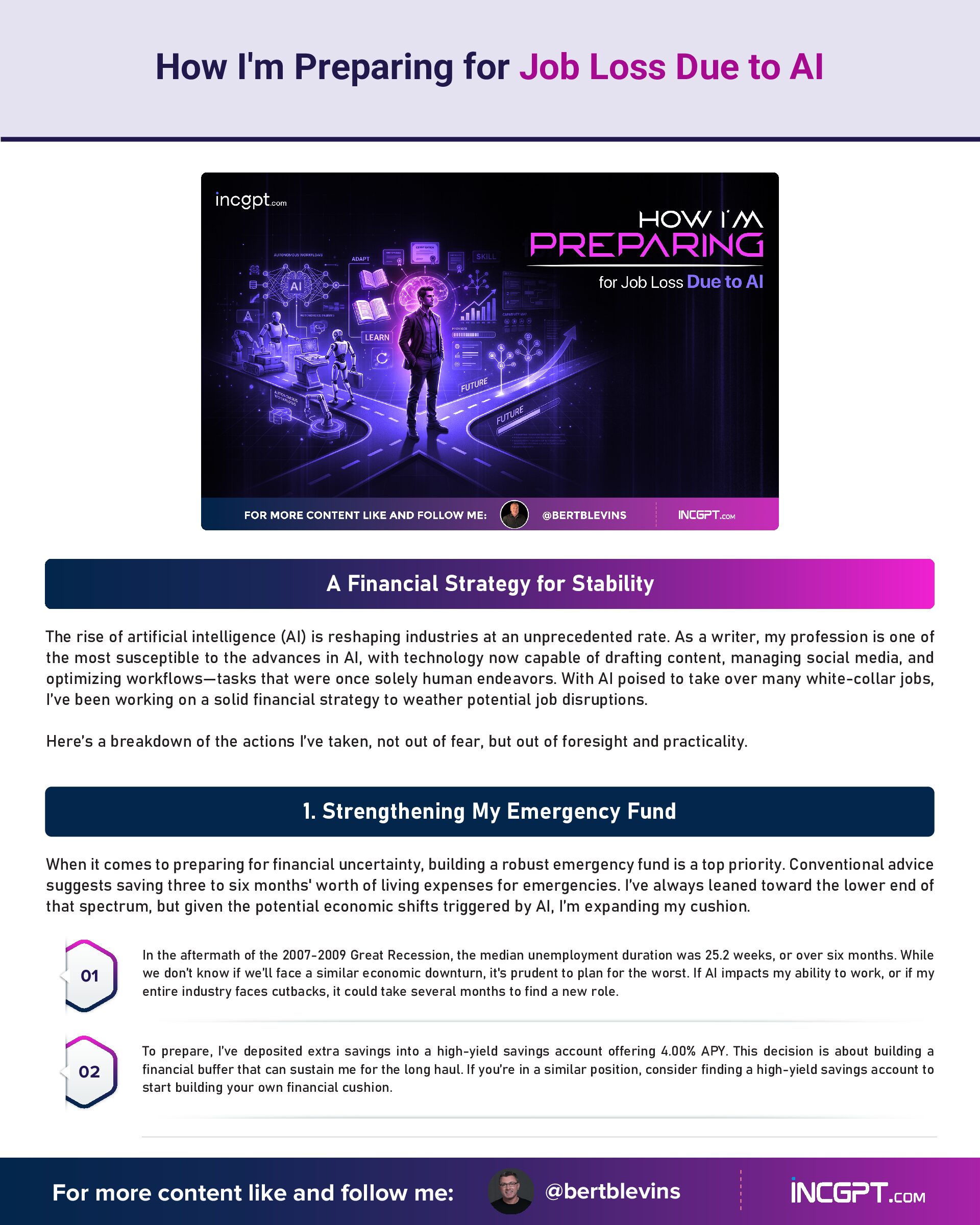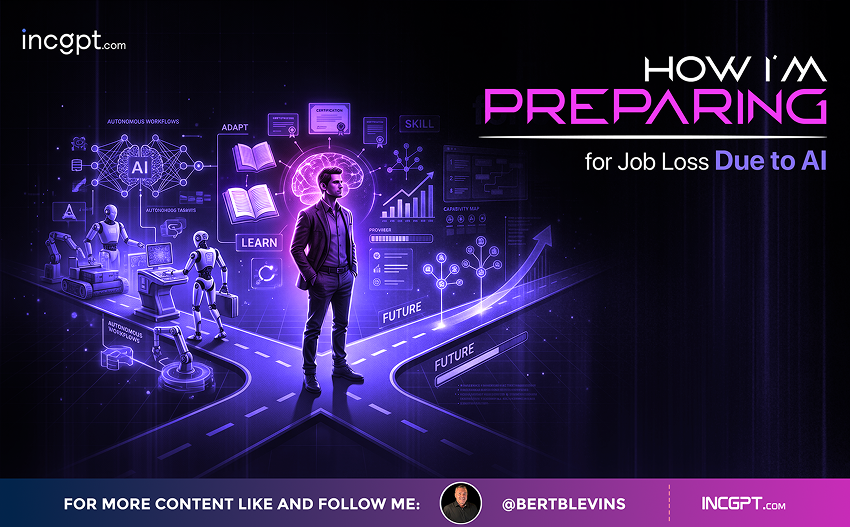
How I'm Preparing for Job Loss Due to AI
A Financial Strategy for Stability
The rise of artificial intelligence (AI) is reshaping industries at an unprecedented rate. As a writer, my profession is one of the most susceptible to the advances in AI, with technology now capable of drafting content, managing social media, and optimizing workflows—tasks that were once solely human endeavors. With AI poised to take over many white-collar jobs, I’ve been working on a solid financial strategy to weather potential job disruptions.
Here’s a breakdown of the actions I’ve taken, not out of fear, but out of foresight and practicality.
1. Strengthening My Emergency Fund
When it comes to preparing for financial uncertainty, building a robust emergency fund is a top priority. Conventional advice suggests saving three to six months’ worth of living expenses for emergencies. I’ve always leaned toward the lower end of that spectrum, but given the potential economic shifts triggered by AI, I’m expanding my cushion.
In the aftermath of the 2007-2009 Great Recession, the median unemployment duration was 25.2 weeks, or over six months. While we don’t know if we’ll face a similar economic downturn, it’s prudent to plan for the worst. If AI impacts my ability to work, or if my entire industry faces cutbacks, it could take several months to find a new role.
To prepare, I’ve deposited extra savings into a high-yield savings account offering 4.00% APY. This decision is about building a financial buffer that can sustain me for the long haul. If you’re in a similar position, consider finding a high-yield savings account to start building your own financial cushion.
2. Adjusting My Household Budget for Tight Times
Having a substantial emergency fund is a great first step, but it’s also crucial to prepare for a more frugal lifestyle if needed. My wife and I have discussed our options and identified areas where we could significantly cut back on expenses.
For instance, eliminating daycare costs alone would save us $2,000 per month. Additionally, reducing travel expenses could easily save $500 each month. We’ve also discussed cutting out non-essential spending, such as dining out and convenience foods, and even joked about living on a “ramen diet” to stretch our budget further. Although this isn’t ideal, it’s a realistic plan if things get tight.
While downsizing our lifestyle would certainly be uncomfortable, we have a roadmap for how to make it work without feeling like we’re sacrificing our quality of life too drastically.
3. Maximizing Employer Benefits
In the current climate, no one can afford to take employer benefits for granted. I’m currently employed with a company that offers a variety of valuable benefits, such as a 401(k) match, health insurance with an HSA, and flexible spending accounts (FSAs). However, if I lose my job, these benefits will no longer be available, so I’ve been taking full advantage while I still can.
I’ve prioritized contributing as much as possible to my 401(k) to maximize the employer match and minimize my tax burden. My wife and I have already maxed out our Roth IRAs for 2026, and we are diligently adding to our brokerage accounts. These investments serve as a financial safety net, providing us with additional funds should we need them.
In addition to tax-advantaged accounts, we are making sure to increase after-tax investments. This builds a financial foundation that’s separate from our emergency fund, ensuring we’re prepared for various scenarios.
4. Building Long-Term Investment Security
While having a cash cushion and reducing discretionary expenses are crucial short-term strategies, long-term financial health depends on investing wisely. With this in mind, my wife and I continue to build our investment portfolio through various avenues. We’ve been consistently contributing to our brokerage accounts and other retirement funds.
Though we hope not to dip into these investments, they provide an additional layer of security. For example, if an unexpected job loss affects our savings, having accessible investments can help us avoid withdrawing from retirement funds prematurely and incurring penalties. These moves are about ensuring we have both liquid and long-term financial resources to rely on.
5. The Importance of Adaptability
The reality is that no one can predict the future with certainty, and the speed at which AI is evolving presents both opportunities and challenges. While I believe AI will not completely replace human workers in all fields, it’s clear that adapting to new technologies and finding ways to stay relevant is vital. For writers and many other professions, embracing AI tools is not just a matter of keeping up—it’s essential for staying ahead.
I’ve fully incorporated AI into my workflow, using it to help optimize content creation, manage tasks, and streamline other processes. However, I’m also mindful of the fact that AI is always evolving, and what works today might not work tomorrow. This is why continuously improving my skills and diversifying my revenue streams is a priority. If my job is eventually phased out due to AI advancements, I want to be prepared with new skills that will make me competitive in an evolving job market.
6. Preparing for the Unknown
While I’m taking specific financial steps to safeguard myself from potential job loss, I also recognize that economic shifts are often unpredictable. For that reason, I’m working on building flexibility into both my personal and professional life.
One of the biggest changes I’ve made is diversifying my income streams. In addition to writing, I’ve been exploring opportunities for freelance work, online teaching, and side businesses. These efforts give me a backup plan if my primary income is threatened. Moreover, I’m learning new skills related to digital marketing and content strategy, which will help me remain relevant in the job market, even as industries evolve.
7. Diversifying Financial Risk
In addition to my emergency savings, employer benefits, and investments, I’m also exploring other ways to diversify my financial risk. One option I’m considering is real estate, either through rental properties or real estate investment trusts (REITs). Real estate offers an opportunity for both income and appreciation, and it serves as a hedge against inflation.
Another consideration is furthering my education. While my writing career may be at risk, I’m investing in skills that complement AI’s rise, such as data analysis, digital marketing, and project management. This diversification of skills enhances my career mobility and creates options for the future.
Conclusion: A Balanced Approach to Financial Security
I’m not advocating for a doomsday approach, nor am I convinced that AI will fully eliminate all jobs. However, the reality is that automation and AI will continue to disrupt industries, and it’s critical to take proactive steps to ensure financial security.
Building a solid emergency fund, reducing spending, maximizing employer benefits, and investing wisely are just a few of the financial moves I’ve made to prepare for uncertainty. While none of these steps guarantees job security, they help me feel more confident and in control of my financial future.
If your career is also vulnerable to AI advancements, consider taking similar steps to protect yourself financially. It’s not about being fearful but about planning and positioning yourself for success in a changing world. By being proactive and adaptable, we can safeguard our financial futures, regardless of what the future holds.