A Reflection on Bertrand Russell’s Nobel Prize Acceptance Speech
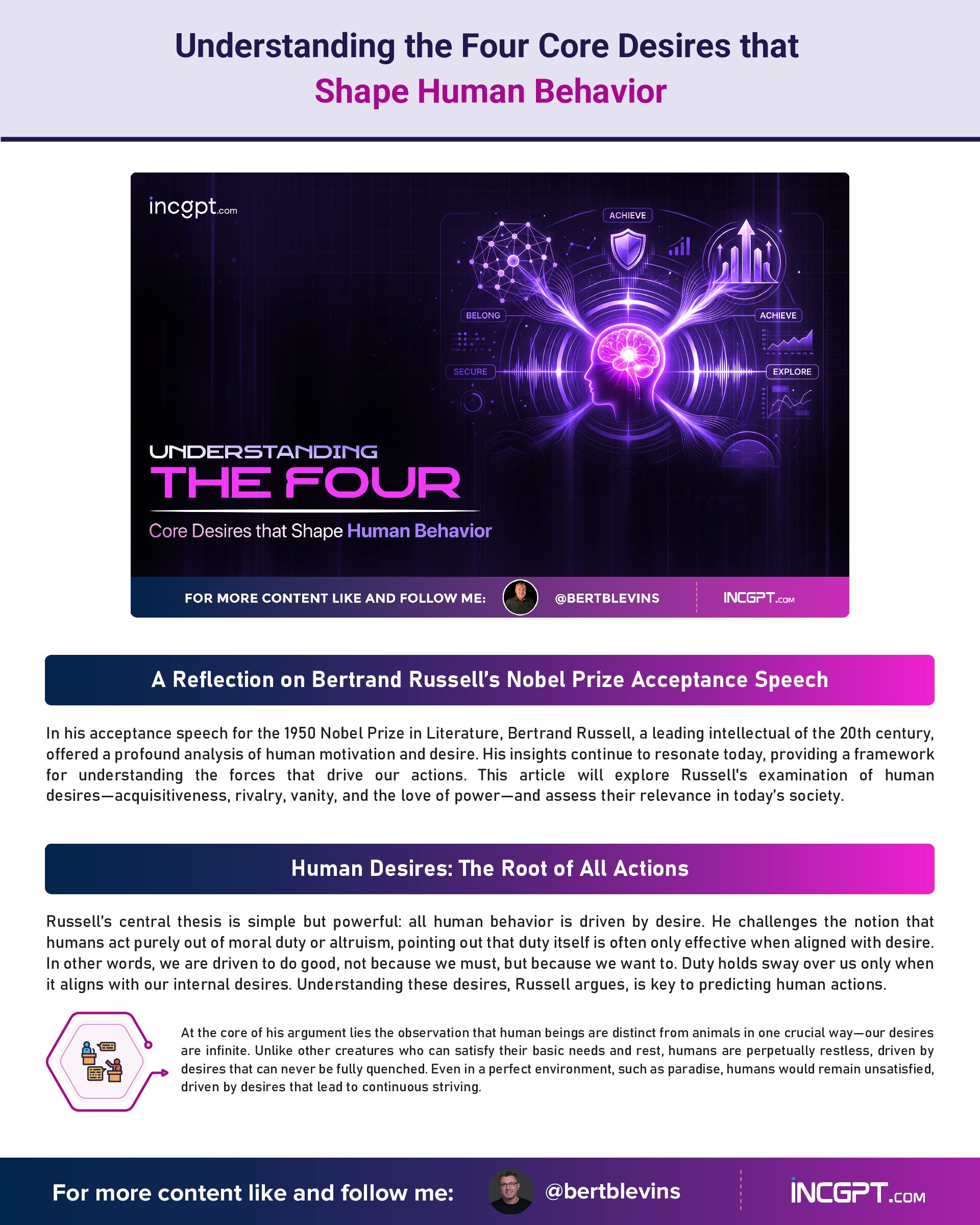
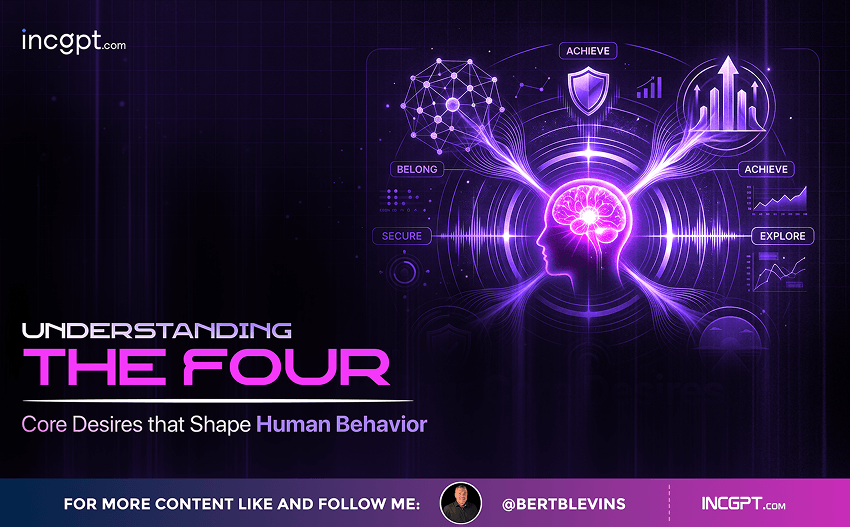
In his acceptance speech for the 1950 Nobel Prize in Literature, Bertrand Russell, a leading intellectual of the 20th century, offered a profound analysis of human motivation and desire. His insights continue to resonate today, providing a framework for understanding the forces that drive our actions. This article will explore Russell’s examination of human desires—acquisitiveness, rivalry, vanity, and the love of power—and assess their relevance in today’s society.
Human Desires: The Root of All Actions
Russell’s central thesis is simple but powerful: all human behavior is driven by desire. He challenges the notion that humans act purely out of moral duty or altruism, pointing out that duty itself is often only effective when aligned with desire. In other words, we are driven to do good, not because we must, but because we want to. Duty holds sway over us only when it aligns with our internal desires. Understanding these desires, Russell argues, is key to predicting human actions.
At the core of his argument lies the observation that human beings are distinct from animals in one crucial way—our desires are infinite. Unlike other creatures who can satisfy their basic needs and rest, humans are perpetually restless, driven by desires that can never be fully quenched. Even in a perfect environment, such as paradise, humans would remain unsatisfied, driven by desires that lead to continuous striving.
The Desire for Acquisitiveness: The Lust for Possession
One of the most fundamental desires Russell identifies is acquisitiveness—the urge to possess as much as possible. This desire is rooted in a combination of fear and the need for survival. As a child, the experience of starvation can leave lasting psychological scars, motivating the individual to accumulate goods out of a fear of future scarcity. This desire persists even in the wealthy, as exemplified by the infamous example of Rockefeller, who, despite having all he could ever need, continued to hoard. No matter how much one possesses, the desire to acquire more remains unfulfilled. This perpetual hunger for more material wealth and goods has been explored in psychological research as the concept of the hedonic treadmill.
This insatiable craving for possessions drives individuals to seek endless accumulation, a cycle that Russell describes as ultimately unfulfilling. It highlights a critical element of human nature: the quest for more never ends.
Rivalry: The Drive to Compete and Outdo Others
While acquisitiveness fuels individual desire, it is often eclipsed by rivalry. Russell points out that rivalry often drives people to pursue wealth, not for the sake of personal gain, but to outdo others. The human tendency to compete and best rivals can sometimes lead to self-destructive behaviors. Rivalry, for Russell, is more dangerous than acquisitiveness because it can prompt individuals to sacrifice everything to ruin their competitors. The desire to see one’s rival fall can lead to poverty, war, and societal collapse. This tendency to act against self-interest in order to outdo others is reflected in the modern world through intense competition in various domains, from business to politics.
Vanity: The Desire for Recognition and Glory
Vanity is another critical driver of human behavior. Russell describes it as the compelling urge to seek attention and approval, often manifesting as a desire for others to acknowledge one’s worth. From a young age, humans exhibit a need for validation, as demonstrated by children’s constant pleas of “Look at me.” As we grow older, this desire for recognition takes more complex forms, whether it be through social media validation, professional accolades, or posthumous fame. The pursuit of fame, for Russell, is one of the most pervasive and insidious aspects of human nature. The desire to be noticed often eclipses more substantive desires, and modern life, particularly in the age of social media, has amplified this urge to an extreme level.
The Love of Power: The Ultimate Desire
Among all human desires, Russell identifies the love of power as the most potent. It is not just the desire for recognition that drives people, but the need to control and exert influence over others. Russell notes that love of power is insatiable—it is the most potent of the four desires because it can often override other impulses like vanity. While vanity can be satisfied through glory, power requires direct control, often over others. In fact, individuals who seek power are often motivated by the desire to make others do things they would prefer not to do. This compulsion to dominate others can take on destructive forms, particularly in political and authoritarian systems.
However, Russell acknowledges that the love of power is not inherently negative. It can manifest in the pursuit of knowledge, scientific progress, and positive political change. The desire to wield influence in a constructive way has driven humanity’s greatest achievements, particularly in the realms of science and politics. Nonetheless, the dangerous form of power, especially when wielded by individuals with egos inflated by their own desires, often results in tyranny and suffering.
Secondary Motives: The Desire for Excitement
In addition to these primary desires, Russell touches upon a set of secondary motives, one of which is the love of excitement. He contends that human beings are particularly susceptible to boredom and that much of human activity is driven by the need to alleviate this feeling. Russell’s critique of modern society highlights how the sedentary nature of contemporary life has exacerbated this craving for excitement. Without outlets for physical activity or engagement with the world, many individuals turn to artificial sources of stimulation. Russell proposes that societies must create more constructive outlets for human energy, rather than relying on harmful forms of excitement such as warfare or violence.
Conclusion
The Balance Between Desires
In reflecting on these four desires—acquisitiveness, rivalry, vanity, and love of power—Russell’s work offers an invaluable framework for understanding human behavior. He does not suggest that these desires are inherently evil or destructive, but that they need to be understood and moderated within a healthy social system. It is by acknowledging and managing these impulses that individuals and societies can avoid self-destructive behaviors and build a more harmonious existence. Russell’s timeless wisdom urges us to understand the complex motivations driving our actions, not as a way to suppress them, but to better direct them toward more meaningful and productive ends.
In today’s world, Russell’s analysis of these desires remains remarkably relevant, as we continue to witness their impact on everything from individual behavior to global politics. By considering the dynamics of these desires, we can better navigate the challenges of modern life, fostering a deeper understanding of what it means to lead a meaningful, fulfilled existence.