Navigating Real Estate SEO in the Age of AI: A New Era of Authority and Strategy
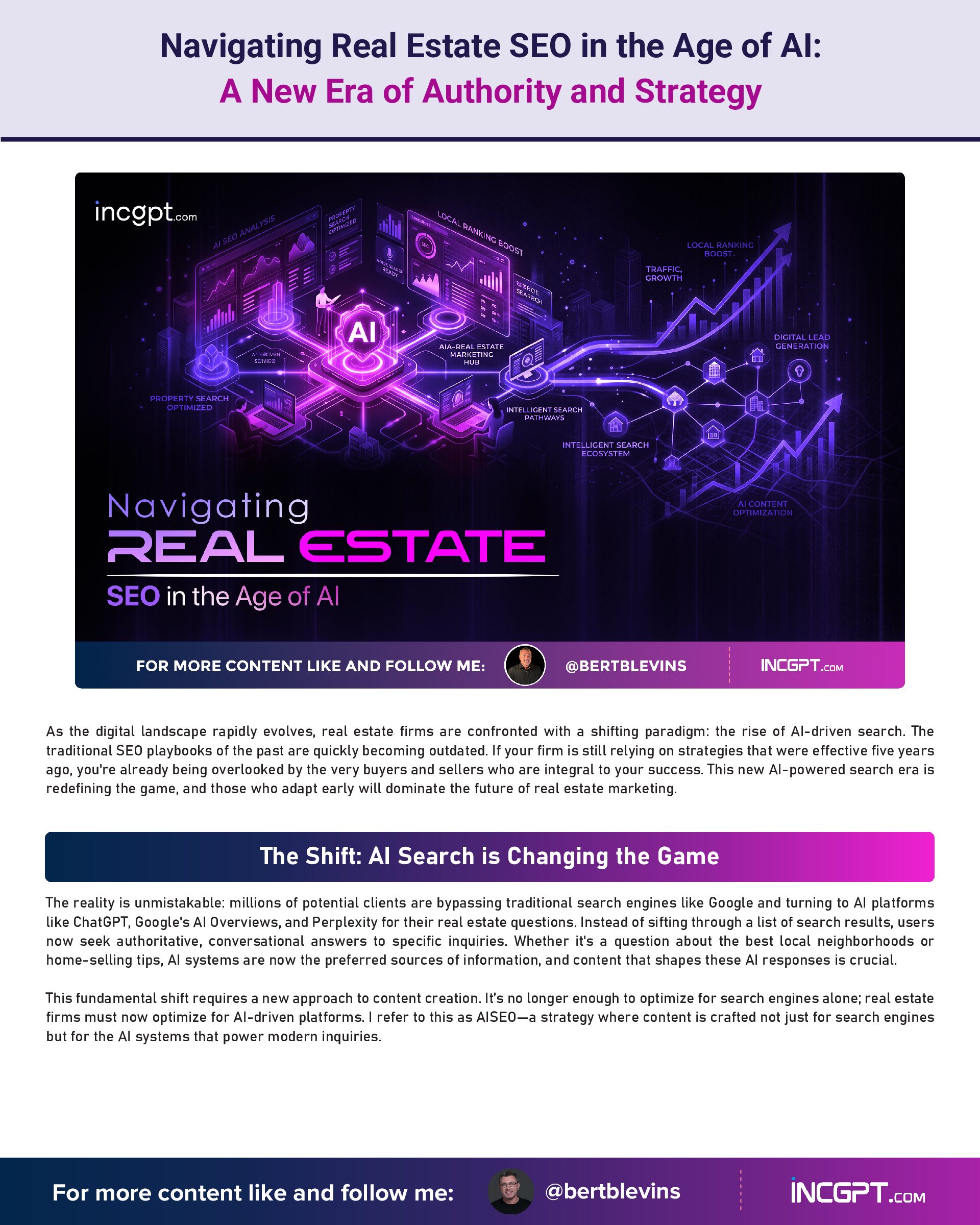
As the digital landscape rapidly evolves, real estate firms are confronted with a shifting paradigm: the rise of AI-driven search. The traditional SEO playbooks of the past are quickly becoming outdated. If your firm is still relying on strategies that were effective five years ago, you’re already being overlooked by the very buyers and sellers who are integral to your success. This new AI-powered search era is redefining the game, and those who adapt early will dominate the future of real estate marketing.
The Shift: AI Search is Changing the Game
The reality is unmistakable: millions of potential clients are bypassing traditional search engines like Google and turning to AI platforms like ChatGPT, Google’s AI Overviews, and Perplexity for their real estate questions. Instead of sifting through a list of search results, users now seek authoritative, conversational answers to specific inquiries. Whether it’s a question about the best local neighborhoods or home-selling tips, AI systems are now the preferred sources of information, and content that shapes these AI responses is crucial.
This fundamental shift requires a new approach to content creation. It’s no longer enough to optimize for search engines alone; real estate firms must now optimize for AI-driven platforms. I refer to this as AISEO—a strategy where content is crafted not just for search engines but for the AI systems that power modern inquiries.
Key Strategies for Thriving in the AI-Powered Era
1. Establish Local Authority
AI systems prioritize brands that exhibit deep knowledge and expertise in their local markets. To stand out, real estate firms must invest in creating comprehensive neighborhood guides, insightful market trend analyses, and original content that showcases their understanding of the local landscape. For example, if someone asks an AI platform about the best neighborhoods near top-rated schools, your detailed, authoritative content should be the first resource AI draws upon.
2. Prioritize Structured, Answer-Ready Content
AI thrives on clarity. By creating content with distinct sections, FAQs, definitions, and step-by-step guides, your website becomes an ideal source for AI systems looking for clear, digestible information. For instance, if a user queries, “What’s the average home price in North Scottsdale?” or “How do I prepare my luxury home for sale?” a well-structured, metadata-rich response ensures that your content is recognized and extracted by AI.
3. Embrace Quality Over Quantity
In the AI-driven world, shallow or generic content has little chance of visibility. Instead of publishing numerous short, unfocused blog posts, focus on creating a single, in-depth, data-backed guide about a niche market, updated regularly. High-quality, well-researched content will consistently outrank less valuable articles, particularly when it’s optimized for both human readers and AI systems.
4. Build a Solid Digital Foundation
The technical infrastructure of your website plays a significant role in how AI systems interpret and utilize your content. Prioritize conversational content, structured data markup, and clear information architecture that makes it easy for AI systems to extract and share your expertise. Clean, accessible design matters less than clean, understandable information that clearly communicates your market authority.
5. Integrate AI Tools Into Your Firm’s Strategy
The best technology amplifies your team’s ability to engage confidently with clients. By integrating AI-driven tools, real estate firms can empower their agents to better identify prospects, build targeted outreach campaigns, and gain valuable market insights. These tools provide agents with data-driven expertise, which allows them to enhance their local authority and respond to clients with confidence.
6. Maintain Consistency Across All Platforms
In the AI age, consistency is key. Whether clients encounter your firm online, through print materials, AI search results, or in-person interactions, the message should remain the same: your firm is the recognized local authority. This consistency not only builds trust with clients but also positions your firm as a reliable source for AI systems to reference across platforms.
Authenticity and Strategic Investment in the AI Era
Real estate firms that thrive in the AI age are being more strategic about their investments. Rather than chasing every new technological trend, these firms are intentionally selecting tools and strategies that reinforce their position as the local authority. In an era where AI is reshaping the way clients search and engage with real estate content, authenticity and consistency become essential. By focusing on crafting valuable, authoritative content and maintaining a unified message across all platforms, real estate firms can establish themselves as leaders in a new digital age.
In conclusion, the future of real estate marketing lies in adapting to AI-driven search. Firms that prioritize deep local expertise, quality content, and seamless integration of AI tools will be the ones who thrive, securing their position as the go-to authority in their markets.