The Rise of Vibe Coding: A New Era for Creators
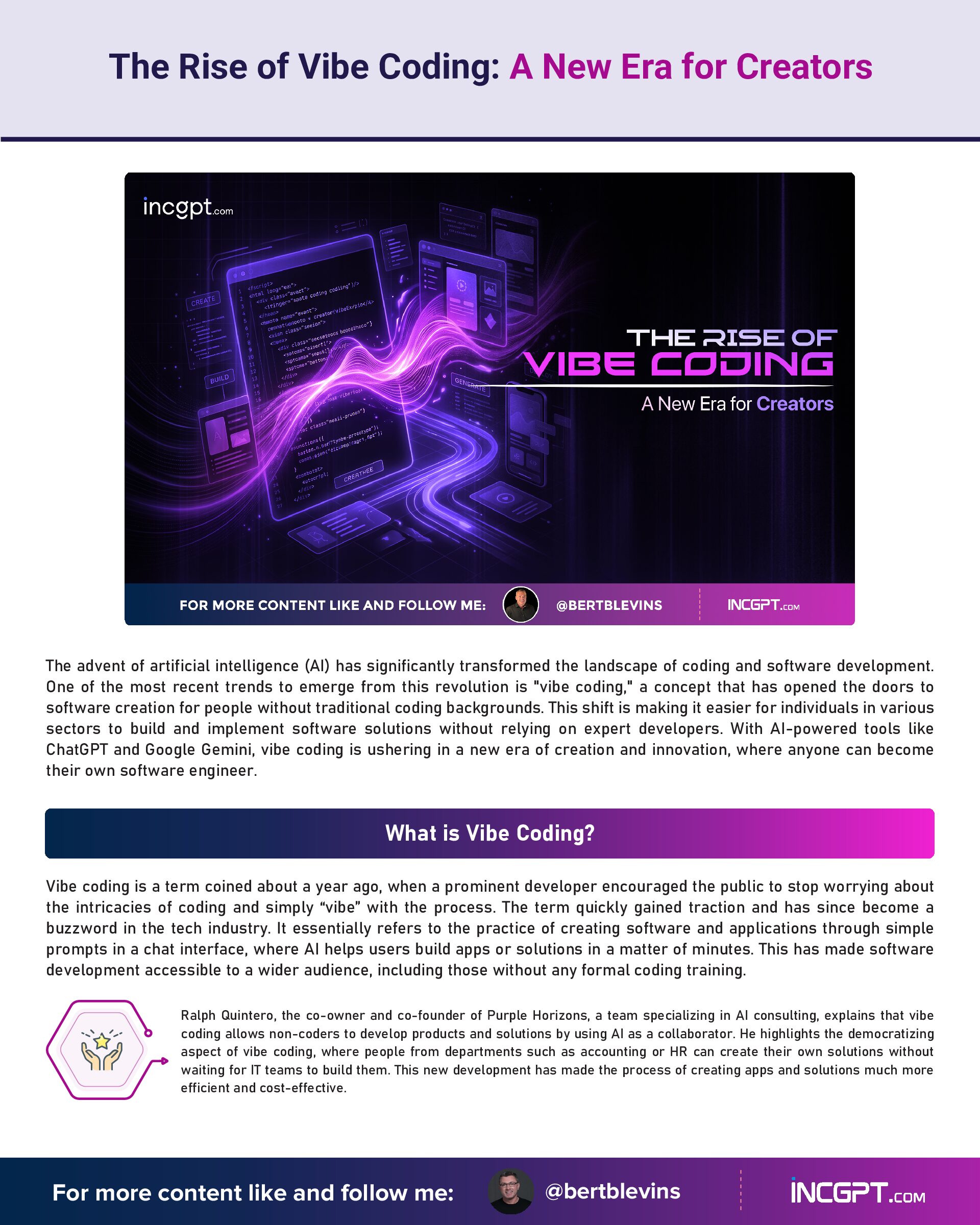
The advent of artificial intelligence (AI) has significantly transformed the landscape of coding and software development. One of the most recent trends to emerge from this revolution is “vibe coding,” a concept that has opened the doors to software creation for people without traditional coding backgrounds. This shift is making it easier for individuals in various sectors to build and implement software solutions without relying on expert developers. With AI-powered tools like ChatGPT and Google Gemini, vibe coding is ushering in a new era of creation and innovation, where anyone can become their own software engineer.
What is Vibe Coding?
Vibe coding is a term coined about a year ago, when a prominent developer encouraged the public to stop worrying about the intricacies of coding and simply “vibe” with the process. The term quickly gained traction and has since become a buzzword in the tech industry. It essentially refers to the practice of creating software and applications through simple prompts in a chat interface, where AI helps users build apps or solutions in a matter of minutes. This has made software development accessible to a wider audience, including those without any formal coding training.
Ralph Quintero, the co-owner and co-founder of Purple Horizons, a team specializing in AI consulting, explains that vibe coding allows non-coders to develop products and solutions by using AI as a collaborator. He highlights the democratizing aspect of vibe coding, where people from departments such as accounting or HR can create their own solutions without waiting for IT teams to build them. This new development has made the process of creating apps and solutions much more efficient and cost-effective.
Lowering Costs for Innovation
Traditionally, creating a pilot app could cost thousands of dollars, including the need for professional software engineers, extensive development time, and testing. Today, however, platforms like ChatGPT and Google Gemini have drastically reduced this cost. Instead of spending large sums, businesses and individuals now pay as little as $20 to $40 a month for these AI-powered tools. With access to these platforms, users can create an unlimited number of projects, leading to a significant reduction in the barrier to entry for those wanting to innovate.
This reduction in cost and time has revolutionized the process of software creation. Instead of relying on external developers or large development teams, anyone with access to an AI platform can start creating. This shift has also made it possible for smaller, niche markets to develop tailored software solutions that were previously unfeasible due to the high costs of development.
Impact on the Workforce
Vibe coding has not only democratized software development but also reshaped how businesses operate. As Quintero points out, employees across various departments can now take the initiative to create software solutions for their specific needs, without the need for external intervention. This shift is expected to increase productivity, as employees will be able to solve problems more independently, without waiting for specialized teams to take action.
However, this transformation also poses potential challenges for traditional roles in software development. While experts in coding will still be essential for highly specialized tasks, vibe coding has shifted the focus toward more accessible, user-friendly tools. As Quintero and his co-founder Ginanni D’Alerta suggest, the future may see a transition in the job market where those with domain knowledge and the ability to prompt AI effectively will be the ones who excel. Rather than writing lines of code, professionals will need to understand the end goal of their software projects and guide the AI to achieve it.
This shift is not expected to eliminate developers, but rather to transform their roles. The need for expertise in project management, user experience design, and product development will grow as the emphasis moves away from technical coding to a focus on what users want to achieve. Quintero notes that understanding the user’s goals and translating those into actionable plans will become a critical skill in the age of vibe coding.
Empowering Niche Industries
One of the most exciting aspects of vibe coding is its potential to empower niche industries and communities. Previously, smaller markets that required specialized software were left behind due to the high costs of development. For instance, someone in a niche field like bird watching or aquarium management could now build a solution for their needs without relying on larger software manufacturers to take on the project.
Quintero provides an example of how vibe coding has allowed even students to solve real-world problems. At a buildathon with Palmer Trinity School, over 100 students worked on solutions for organizations such as Deering Estate and Zoo Miami, using vibe coding tools. This democratization of software development is paving the way for a more inclusive and diverse set of innovations.
Challenges and Considerations
While vibe coding has opened many doors, it is not without its challenges. Quintero and D’Alerta emphasize that the platforms currently available are still in their early stages and require users to approach them with caution. Just like with hiring an assistant, users must decide how much trust and autonomy to give to these AI-powered tools. Whether it’s allowing AI to access sensitive data or granting it the freedom to make decisions, users must consider how much control they want to retain.
Another challenge lies in the potential for oversaturation in the market. Since anyone can create software through vibe coding, it may become difficult to profit from these creations, as the barriers to entry are so low. However, Quintero believes that this could present an opportunity for individuals to create highly specialized solutions for niche communities, where the demand for tailored software is high, but the development costs were previously prohibitive.
The Future of Vibe Coding
As vibe coding continues to evolve, it is clear that the way we approach software development will undergo significant changes. While traditional coding may never disappear entirely, the rise of AI-powered tools is shifting the focus from technical expertise to critical thinking and problem-solving. Those who can effectively guide AI to meet user needs will be the ones driving innovation in the future.
For businesses and individuals willing to adapt to this new way of creating software, the opportunities are limitless. Whether it’s improving internal processes, solving niche market problems, or creating entirely new products, vibe coding offers an accessible and cost-effective way to bring ideas to life. As AI continues to evolve, it’s likely that the concept of vibe coding will continue to expand, allowing even more people to become creators in their own right.
Conclusion
Vibe coding represents a shift in how we think about software creation. It enables individuals without traditional coding experience to build solutions, innovate, and solve problems using AI-powered tools. While this trend has the potential to democratize software development, it also brings new challenges and considerations. As AI continues to improve and become more accessible, it is clear that vibe coding will play a crucial role in the future of software creation, transforming the way we work and innovate across industries.