Introduction to Vibe Coding
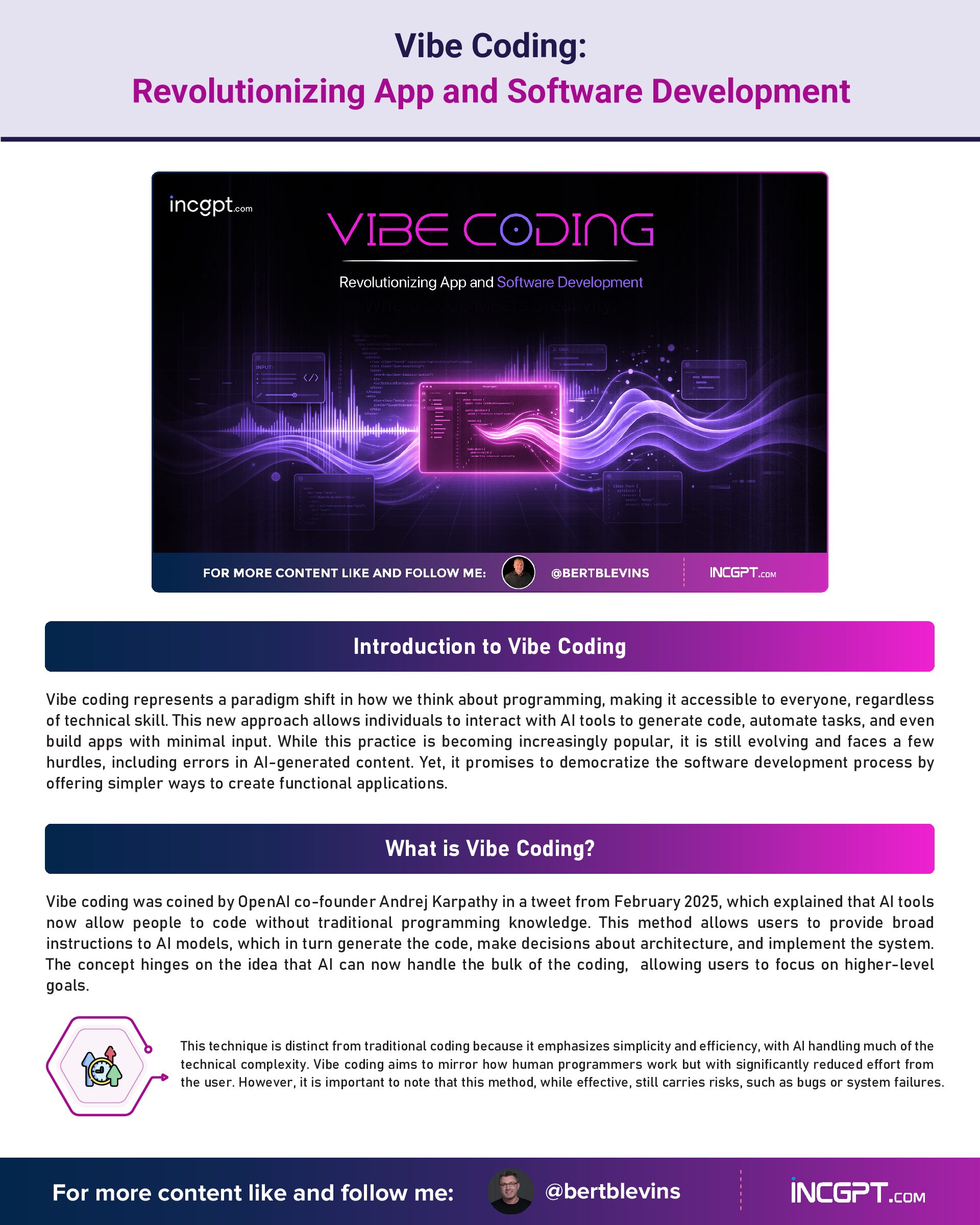
Vibe coding represents a paradigm shift in how we think about programming, making it accessible to everyone, regardless of technical skill. This new approach allows individuals to interact with AI tools to generate code, automate tasks, and even build apps with minimal input. While this practice is becoming increasingly popular, it is still evolving and faces a few hurdles, including errors in AI-generated content. Yet, it promises to democratize the software development process by offering simpler ways to create functional applications.
What is Vibe Coding?
Vibe coding was coined by OpenAI co-founder Andrej Karpathy in a tweet from February 2025, which explained that AI tools now allow people to code without traditional programming knowledge. This method allows users to provide broad instructions to AI models, which in turn generate the code, make decisions about architecture, and implement the system. The concept hinges on the idea that AI can now handle the bulk of the coding, allowing users to focus on higher-level goals.
This technique is distinct from traditional coding because it emphasizes simplicity and efficiency, with AI handling much of the technical complexity. Vibe coding aims to mirror how human programmers work but with significantly reduced effort from the user. However, it is important to note that this method, while effective, still carries risks, such as bugs or system failures.
Tools Used for Vibe Coding
Several tools are currently available for vibe coding, each with unique features. Popular options include OpenAI’s Codex, Claude Code, and platforms like Windsurf and Replit. These tools simplify the coding process by offering integrated workspaces where users can input prompts, interact with AI, and refine their projects. Unlike older methods where users would need to piece together AI outputs manually, these platforms allow for a more cohesive workflow, making the process smoother and more accessible.
For professional programmers, enterprise versions of vibe-coding tools like Microsoft Copilot offer a more robust solution, with built-in AI assistance that works seamlessly within development environments. These tools are integrated into the coding process, helping automate tasks such as testing, debugging, and even quality assurance.
How Vibe Coding Works
Vibe coding works by letting users provide AI with instructions to generate code, make design decisions, and handle other tasks. For example, users might tell the AI, “Build a custom version of Wordle,” and the tool would create the necessary code, structure, and deployment instructions. The process is broken down into manageable pieces, allowing the AI to focus on one task at a time, ensuring greater clarity and accuracy in its work.
The goal of vibe coding is not just automation, but also collaboration between the AI and the user. While AI handles the technical aspects, the user provides the vision and oversight. This makes it easier for individuals with little to no programming experience to complete complex tasks, such as building and deploying apps.
The Role of Agentic AI in Vibe Coding
A key factor in the success of vibe coding is the development of agentic AI. Unlike traditional AI models that only respond to specific inputs, agentic AI is designed to be more autonomous and capable of taking broader actions. It can interact with the user’s code, analyze files, make decisions, and even access third-party tools when necessary.
This type of AI is particularly useful in vibe coding because it reduces the amount of input required from the user, automating many of the processes that traditionally required hands-on coding. However, despite its advancements, agentic AI is still far from perfect. Errors can occur, and the AI may occasionally misinterpret instructions or make decisions that do not align with the user’s expectations.
Risks and Challenges in Vibe Coding
While vibe coding opens up new possibilities for app and software development, it also presents challenges. One of the primary risks is the possibility of bugs or glitches in the AI-generated code. Because the user does not directly oversee the coding process, it’s possible for the AI to make errors or create suboptimal solutions.
Moreover, the reliance on AI means that users may have less control over the final product. In some cases, the code generated by AI may not meet the user’s requirements or expectations. As such, it is essential for users to carefully review and test the code before deploying it in production environments.
The Future of Vibe Coding
The future of vibe coding is promising, especially as the technology continues to evolve. As AI becomes more sophisticated, the tools available for vibe coding will likely improve, making the process even more intuitive and efficient. Companies are already investing heavily in AI tools that facilitate vibe coding, and as these tools become more refined, they may become standard in the software development industry.
However, it is important to recognize that AI is still far from perfect, and developers will continue to need traditional coding skills to handle more complex tasks. In the near future, we may see a hybrid approach, where AI tools are used alongside traditional development methods, with humans still playing a critical role in ensuring the quality and functionality of the software.
Getting Started with Vibe Coding
For those new to vibe coding, there are a few simple ways to get started:
1. Start with a simple project: Choose a fun and straightforward task, like building a custom version of a popular game, to get familiar with the process.
2. Provide detailed prompts: The more specific and detailed your instructions, the better the AI will perform. Make sure to clarify your vision and requirements.
3. Work in manageable sections: Break down your project into smaller tasks to keep the AI on track and ensure each component is completed accurately.
4. Test your output: Never assume the AI has done everything perfectly. Review the code, test it thoroughly, and make adjustments as needed.
5. Try different tools: Explore different vibe-coding platforms to find the one that best suits your needs.
Conclusion
Vibe coding is an exciting development in the world of software development. By allowing AI to take over much of the coding process, it makes programming more accessible to everyone, from hobbyists to professional developers. While the technology is still evolving and comes with some risks, it has the potential to revolutionize how we build apps and websites in the future. By leveraging the power of AI, vibe coding could make everyone a developer, regardless of their technical background.