A New Era of Automation
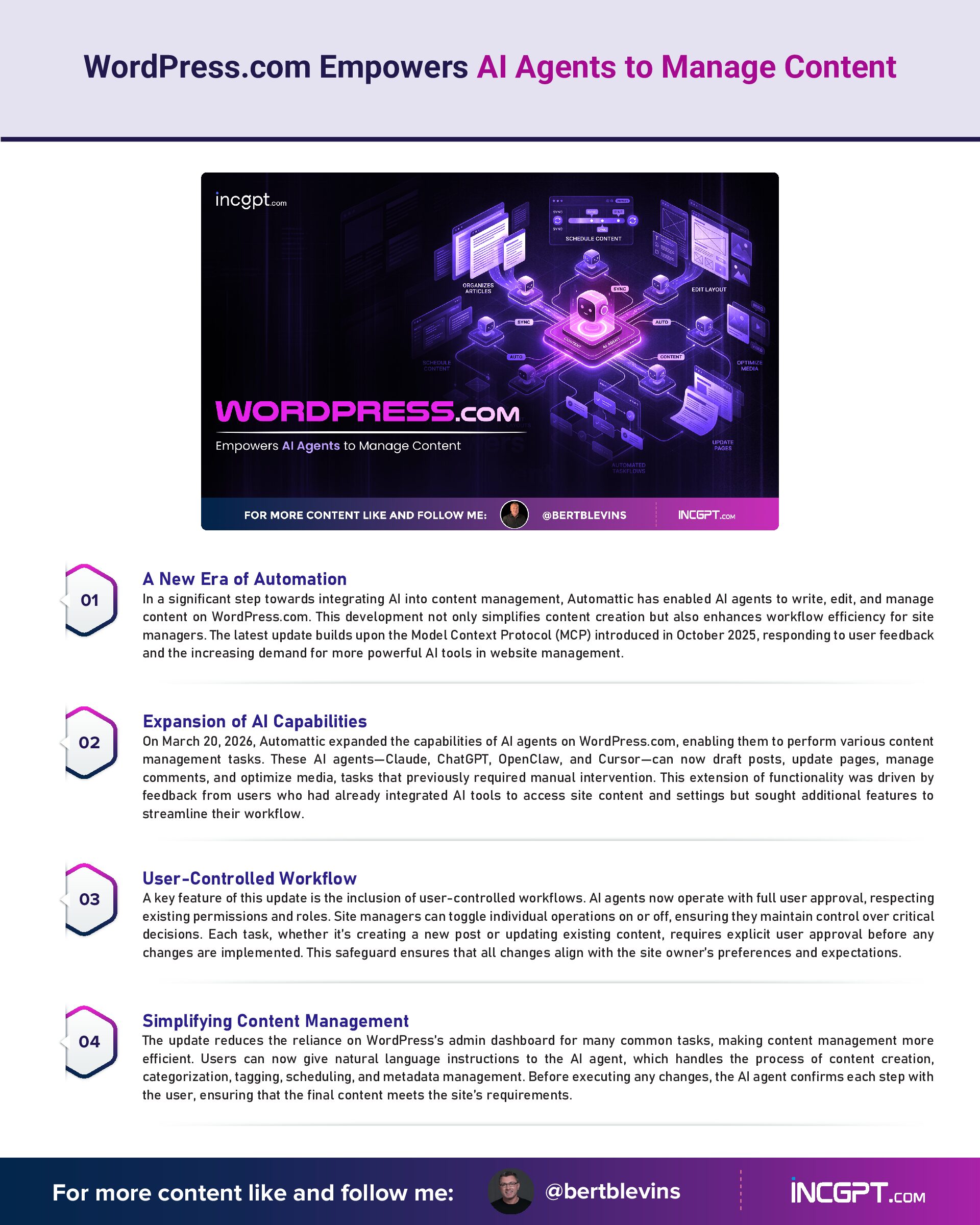
In a significant step towards integrating AI into content management, Automattic has enabled AI agents to write, edit, and manage content on WordPress.com. This development not only simplifies content creation but also enhances workflow efficiency for site managers. The latest update builds upon the Model Context Protocol (MCP) introduced in October 2025, responding to user feedback and the increasing demand for more powerful AI tools in website management.
Expansion of AI Capabilities
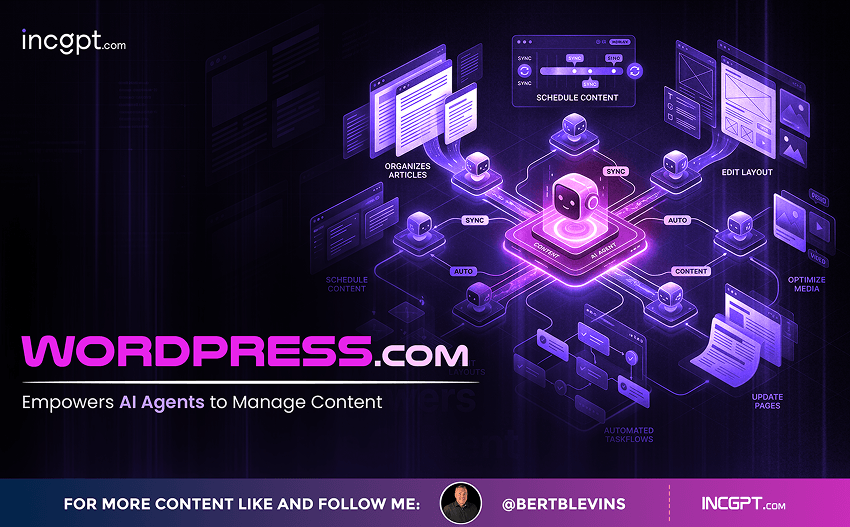
On March 20, 2026, Automattic expanded the capabilities of AI agents on WordPress.com, enabling them to perform various content management tasks. These AI agents—Claude, ChatGPT, OpenClaw, and Cursor—can now draft posts, update pages, manage comments, and optimize media, tasks that previously required manual intervention. This extension of functionality was driven by feedback from users who had already integrated AI tools to access site content and settings but sought additional features to streamline their workflow.
User-Controlled Workflow
A key feature of this update is the inclusion of user-controlled workflows. AI agents now operate with full user approval, respecting existing permissions and roles. Site managers can toggle individual operations on or off, ensuring they maintain control over critical decisions. Each task, whether it’s creating a new post or updating existing content, requires explicit user approval before any changes are implemented. This safeguard ensures that all changes align with the site owner’s preferences and expectations.
Simplifying Content Management
The update reduces the reliance on WordPress’s admin dashboard for many common tasks, making content management more efficient. Users can now give natural language instructions to the AI agent, which handles the process of content creation, categorization, tagging, scheduling, and metadata management. Before executing any changes, the AI agent confirms each step with the user, ensuring that the final content meets the site’s requirements.
Design-Aware Content Creation
For digital experience practitioners, the new capabilities offer an important advancement: design-aware content generation. Before generating content, AI agents can now query the site’s active theme to retrieve its design specifications, such as color palettes, typography settings, and block patterns. This allows content to inherit the site’s design system values, ensuring brand consistency. Moreover, Automattic has made sure that if a theme is changed after content has been created, the AI agent automatically updates the generated content to reflect the new theme.
This design-awareness eliminates a major barrier to enterprise adoption of AI tools, as it addresses concerns about maintaining brand guidelines and ensuring content aligns with the overall design framework.
Built-in Safety Controls
Despite the expanded capabilities, Automattic has emphasized safety and control, anticipating potential concerns over giving AI agents write access. The system incorporates several safety mechanisms to ensure that all changes are deliberate and reversible. Each change made by an AI agent requires user approval, and new posts or pages default to draft status, ensuring they are reviewed before going live.
Additionally, deletions of posts, pages, comments, and media are moved to trash and can be recovered within 30 days. Permanent deletions, particularly for taxonomy terms, require a second confirmation from the user. All actions performed by the AI agents are logged in the site’s Activity Log, providing a clear record of changes. The AI agents also respect existing user role restrictions, ensuring that a Contributor, for example, cannot publish content or change site settings.
Availability and Access
The new AI-powered write capabilities are available for all WordPress.com paid-plan subscribers. Users can enable the Model Context Protocol through the MCP settings dashboard without requiring plugin installations or code changes. With the MCP-enabled write operations, users can connect their preferred AI client and begin interacting with their WordPress site. Automattic has provided detailed documentation, including an MCP Tools Reference and a prompt-examples library, to guide users through the process.
Impact on Content Management Systems (CMS)
This update positions WordPress.com alongside other content management and digital experience platform (DXP) vendors, such as Contentful, Contentstack, and Adobe Experience Manager, who are also integrating AI tools into their systems. Automattic’s approach of integrating directly with MCP-native AI clients, without relying on proprietary agents or intermediary layers, streamlines the process and offers flexibility for users with existing AI tools in place.
By adding write capabilities, Automattic has not only enhanced the functionality of WordPress.com but also positioned itself as a leader in the growing trend of AI-powered content management. The integration of AI with the Model Context Protocol creates a more dynamic and responsive workflow, allowing for seamless interaction between CMS, CRM, analytics, and campaign management systems.
New AI Capabilities on WordPress.com
The update introduces 19 new functions that allow AI agents to handle tasks across various aspects of site management. These include:
1. Draft and Publish Posts: AI agents can create posts from provided copy or descriptions, streamlining the writing process.
2. Build and Update Pages: AI can generate landing pages using site design specifications and block patterns, making page creation faster and more consistent with the site’s theme.
3. Manage Comments: AI can approve, reply to, or remove comments without requiring access to the dashboard, enabling more efficient moderation.
4. Organize Content: AI agents can create, rename, and restructure categories and tags, ensuring content is well-organized and easily navigable.
5. Update Media Metadata: AI can edit alt text, captions, and titles for images, improving accessibility and SEO.
Conclusion
Automattic’s latest move to integrate AI agents into WordPress.com marks a significant advancement in content management. With expanded AI capabilities, users can now automate many routine tasks, freeing up time for more creative and strategic activities. The user-controlled workflow ensures that site managers retain full control over the content creation process, while safety controls and design-aware content generation enhance both security and brand consistency. This update positions WordPress.com as a key player in the evolving landscape of AI-driven CMS and DXP platforms. As AI continues to evolve, it’s clear that the future of content management will be smarter, more efficient, and increasingly automated.