Hybrid Cognitive Alignment: Building Successful Human-AI Collaborations
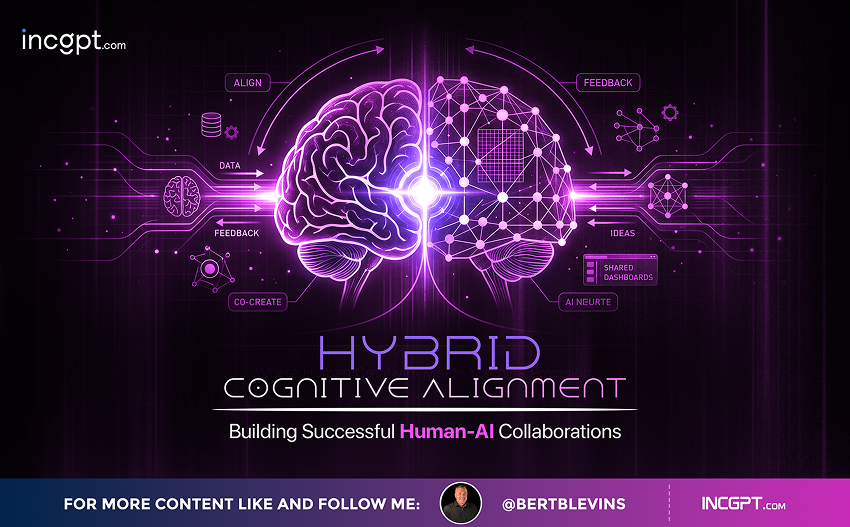
As artificial intelligence (AI) continues to integrate into various industries, it is no longer sufficient for AI to merely be a tool that performs tasks. Instead, the key to successful implementation lies in how AI and humans interact and collaborate. The concept of “hybrid cognitive alignment” has emerged as a necessary framework for optimizing human-AI teamwork, emphasizing the importance of understanding and recalibrating expectations over time.
The Cognitive Gap Between Humans and Machines
At the heart of human-AI collaboration is the fundamental difference in how humans and AI process information. Humans rely on judgment, social cues, and experiential learning to make decisions. AI, on the other hand, processes vast amounts of data, identifying patterns through statistical methods. While these differences can complement each other, they can also lead to friction if not properly managed. Without alignment, tasks can become inefficient, and AI’s potential to reduce workload may be undermined by poor collaboration.
The Hybrid Cognitive Alignment Process
Hybrid cognitive alignment refers to the gradual process by which humans and AI adapt to each other’s strengths and limitations. Rather than expecting a seamless, instant integration, this alignment requires time for both parties to understand each other’s capabilities. As humans interact with AI, they recalibrate their trust and adjust their methods of collaboration. This process ensures that AI becomes a true partner, capable of complementing human judgment and improving overall task performance.
The Challenges of Task Division
When introducing AI into the workplace, it is common for organizations to divide tasks between humans and machines based on predefined rules. This approach can be effective for tasks that are stable and predictable. However, many real-world tasks are dynamic and require adaptability. For example, in high-frequency trading, algorithms are designed to detect market trends. But during unexpected events, such as market crashes or policy changes, AI may struggle to adjust its strategy, causing potentially catastrophic outcomes.
Collaboration Over Raw Performance
One of the major insights from the research on hybrid cognitive alignment is that AI developers must prioritize collaboration over raw performance. While AI’s ability to perform tasks quickly and accurately is essential, it is equally important for AI systems to be designed with collaboration in mind. AI should be able to communicate its strengths and limitations clearly to users, guiding them in how to interact with the system effectively. The focus should be on creating systems that foster strong partnerships with human users rather than systems that merely aim for high performance in isolation.
Applications in Healthcare and Customer Service
AI has already shown significant promise in fields such as healthcare and customer service. In healthcare, AI can analyze medical images with remarkable accuracy, identifying conditions like cancer at an early stage. However, AI lacks the contextual understanding that human doctors possess, such as knowledge of a patient’s medical history or their response to treatment. Therefore, human oversight is essential for the AI’s findings to be interpreted correctly and integrated into a holistic treatment plan.
Similarly, in customer service, AI can rapidly retrieve information from vast databases and resolve standard queries. However, it may struggle to understand the nuances of a customer’s specific needs or concerns. Effective use of AI in customer service requires proper training for employees, enabling them to use AI as a tool while maintaining the human touch necessary for addressing complex issues.
Training and Adaptation for Effective Human-AI Partnerships
For AI to be truly effective, organizations must invest in training that emphasizes how to use AI in collaboration with human expertise. Instead of treating AI as a “plug-and-play” solution, companies should treat it as a collaborative partner that evolves with use. This approach allows employees to understand how to trust AI, when to intervene, and how to adapt their workflows over time.
The Role of AI Developers
AI developers play a critical role in facilitating hybrid cognitive alignment. Developers should focus not only on enhancing AI’s performance but also on how AI communicates its capabilities and limitations. Systems should support users in understanding how the AI works, offering guidance on best practices and providing feedback as users gain more experience. This will help bridge the cognitive gap between humans and machines, transforming AI from a source of frustration into a valuable collaborator.
Moving Toward Seamless Integration
The successful integration of AI into the workplace hinges on building collaborative relationships between humans and machines. Rather than focusing solely on improving AI’s intelligence, efforts should also be directed at aligning cognitive processes and expectations. With the right alignment, AI can serve as a powerful tool that enhances human abilities, making workplaces more efficient and fostering innovation. Hybrid cognitive alignment is not just a technical requirement; it is a key element of the future of human-AI teamwork.
Conclusion
As AI continues to evolve, it is essential to recognize that its true potential lies not in its intelligence but in its ability to collaborate effectively with humans. The hybrid cognitive alignment process offers a roadmap for creating successful human-AI partnerships, ensuring that both humans and machines work together toward shared goals. Organizations that prioritize this alignment will find themselves better equipped to harness the power of AI, unlocking new levels of productivity and innovation. By focusing on collaboration, we can transform AI from a tool into a trusted teammate that drives progress across industries.