The Need for a Data Constitution in the Age of Autonomous AI Agents
As the tech world progresses into the era of “agentic AI” in 2026, we are seeing the rise of autonomous agents that take over tasks such as booking flights, diagnosing system outages, managing infrastructure, and curating media. These systems represent a significant leap from simple chatbots to agents capable of executing complex, real-world tasks. However, this technological advancement brings with it an often-overlooked challenge: ensuring the integrity of the data that powers these agents.
During my time managing platforms with millions of concurrent users during global events like the Super Bowl and the Olympics, I’ve observed the underlying fragility of these agents. While much of the industry focuses on improving model benchmarks—debating the merits of models like Llama 3 versus GPT-4, for example—the real issue often lies in the data itself. A poorly managed data pipeline can lead to disastrous failures, as agents act on bad data. In this new era, data quality is not just a nuisance; it’s a matter of survival for AI systems.
From Human-in-the-Loop to Autonomous Decisions
In the past, “human-in-the-loop” analytics allowed for some margin of error. If a data pipeline experienced issues, it was common for a human analyst to notice discrepancies and fix them before the data caused significant harm. The blast radius of a mistake was contained. However, with autonomous agents, this safety net is gone. When a data pipeline drifts today, agents no longer just report wrong numbers—they take action on those errors. This can result in misconfigured servers, incorrect content recommendations, or even hallucinated responses in customer service.
At scale, such issues can spiral quickly. As I experienced in managing high-stakes systems, traditional data cleaning and monitoring are insufficient to handle the complexity of today’s autonomous systems. What we need is not just a manual cleanup process but a system that automatically checks the integrity of data before it ever touches an AI model.
Enter the Data Quality Creed: A Data Constitution
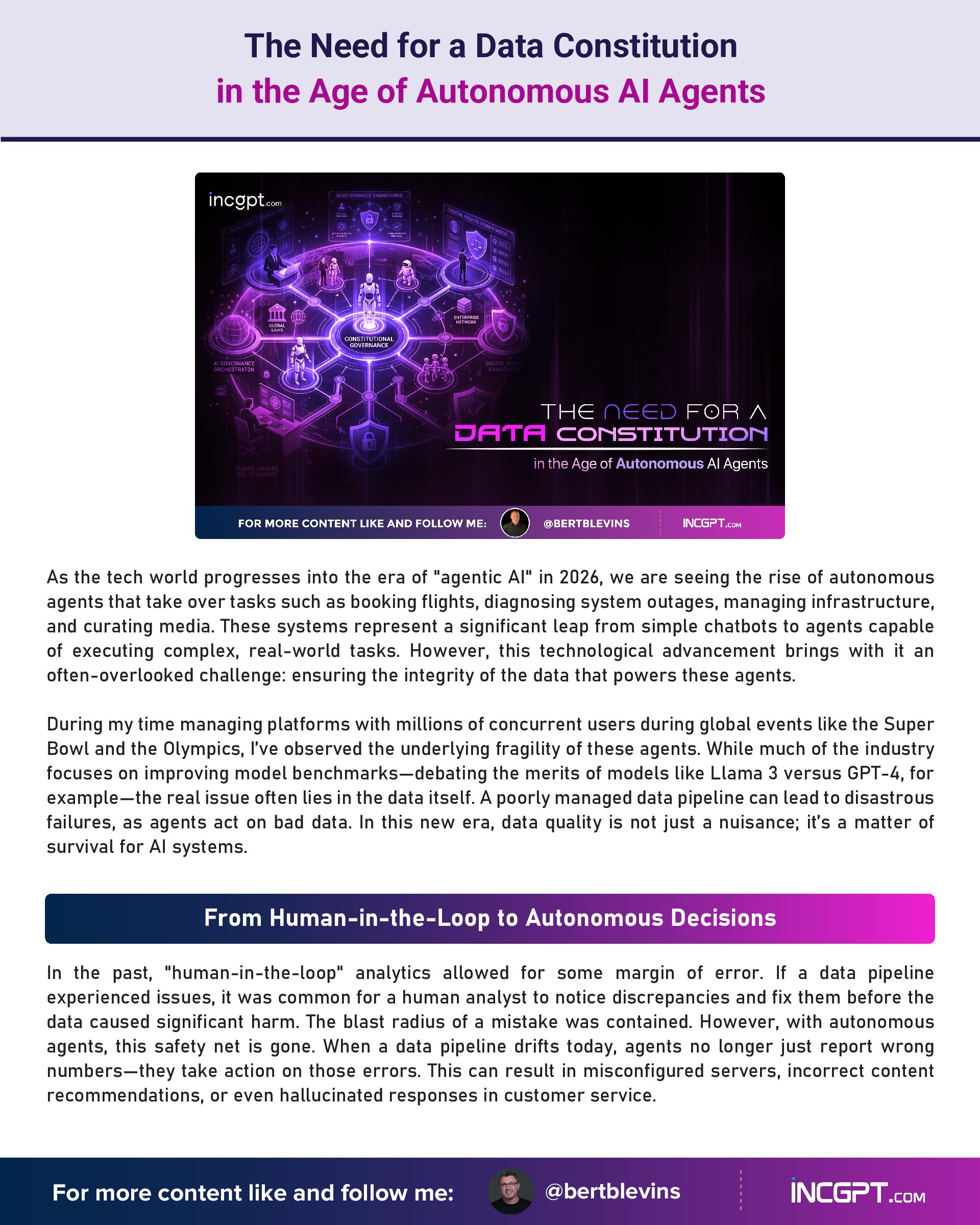
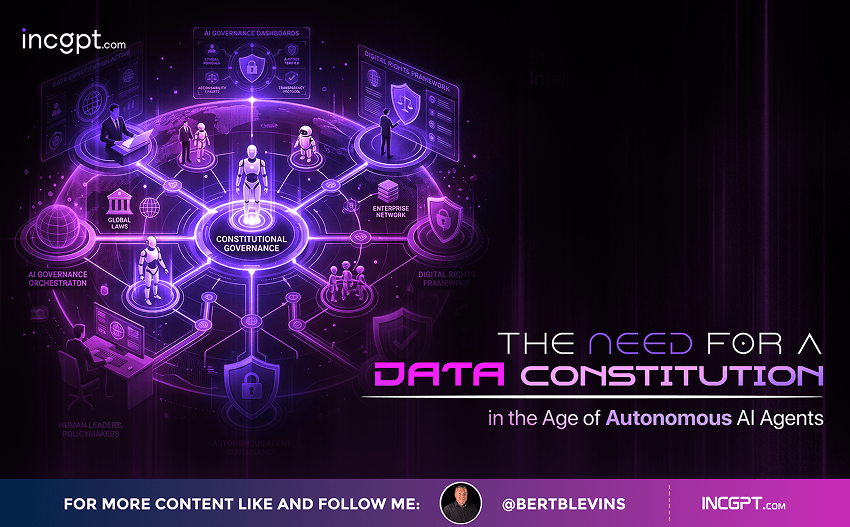
To solve this problem, I propose adopting a “data quality creed”—a framework that functions as a “data constitution” for AI systems. This constitution enforces strict rules on data quality before it reaches AI models, ensuring that data is pristine and reliable. While this methodology has been applied to platforms like NBCUniversal’s streaming architecture, its principles are universal for any enterprise that wants to deploy AI agents at scale.
The Creed framework relies on three non-negotiable principles:
1. The Quarantine Pattern
In the world of AI agents, allowing raw, uncleaned data into the system is unacceptable. The “ELT” approach, which works for many organizations by dumping raw data into a data lake for later cleaning, is a recipe for disaster. The Creed methodology enforces a strict “dead letter queue.” If data violates predefined rules, it is immediately quarantined and prevented from entering the system. This is crucial to preventing “hallucinations,” where agents confidently make incorrect decisions based on faulty data.
2. Schema is Law
While many organizations have embraced the flexibility of “schemaless” data structures, AI agents require a much stricter approach. Data must conform to a well-defined schema with consistent types and business logic. We’ve implemented over 1,000 active rules running across real-time streams, checking everything from null values to timestamp consistency. For example, if a user segment doesn’t match the active taxonomy in the system, the data is blocked. This attention to detail ensures that only valid, reliable data enters the AI pipeline.
3. Vector Consistency Checks
For AI agents that rely on vector databases, ensuring data consistency is vital. Vector databases store embeddings, which are critical to how an AI agent interprets and retrieves information. If the vectors become corrupted due to faulty metadata or misaligned schemas, agents can retrieve irrelevant or even erroneous content. Automated consistency checks ensure that embeddings match the intended text, avoiding “silent failures” where an agent pulls up irrelevant results.
Overcoming Cultural Resistance
Introducing a data constitution like the Creed framework is not only a technical challenge but a cultural one. Engineers often resist such governance, viewing it as bureaucratic and hindering deployment speed. However, the reality is that enforcing strong data hygiene can actually accelerate development by reducing the time spent troubleshooting issues caused by bad data. In our experience, by guaranteeing the purity of incoming data, we eliminated the time spent fixing hallucinations, turning data governance into a “quality of service” guarantee rather than a compliance task.
The Takeaway for AI Decision Makers
As you prepare your AI strategy for 2026 and beyond, focus less on the latest hardware and more on the integrity of your data. Stop obsessing over which model is at the top of the leaderboard and start auditing your data contracts. Remember, an AI agent is only as reliable as the data it’s fed. Without a strict, automated data constitution, your agents will eventually fail, eroding trust, revenue, and customer experience. In the world of Site Reliability Engineering (SRE), a rogue agent is far worse than a broken dashboard—it’s a silent killer of your enterprise’s success.
By adopting the Creed methodology, organizations can ensure that their AI agents operate safely and effectively, preventing them from making disastrous decisions based on flawed data. As we continue to innovate in this new era of autonomous AI, a strong foundation of reliable, well-governed data will be the key to success.