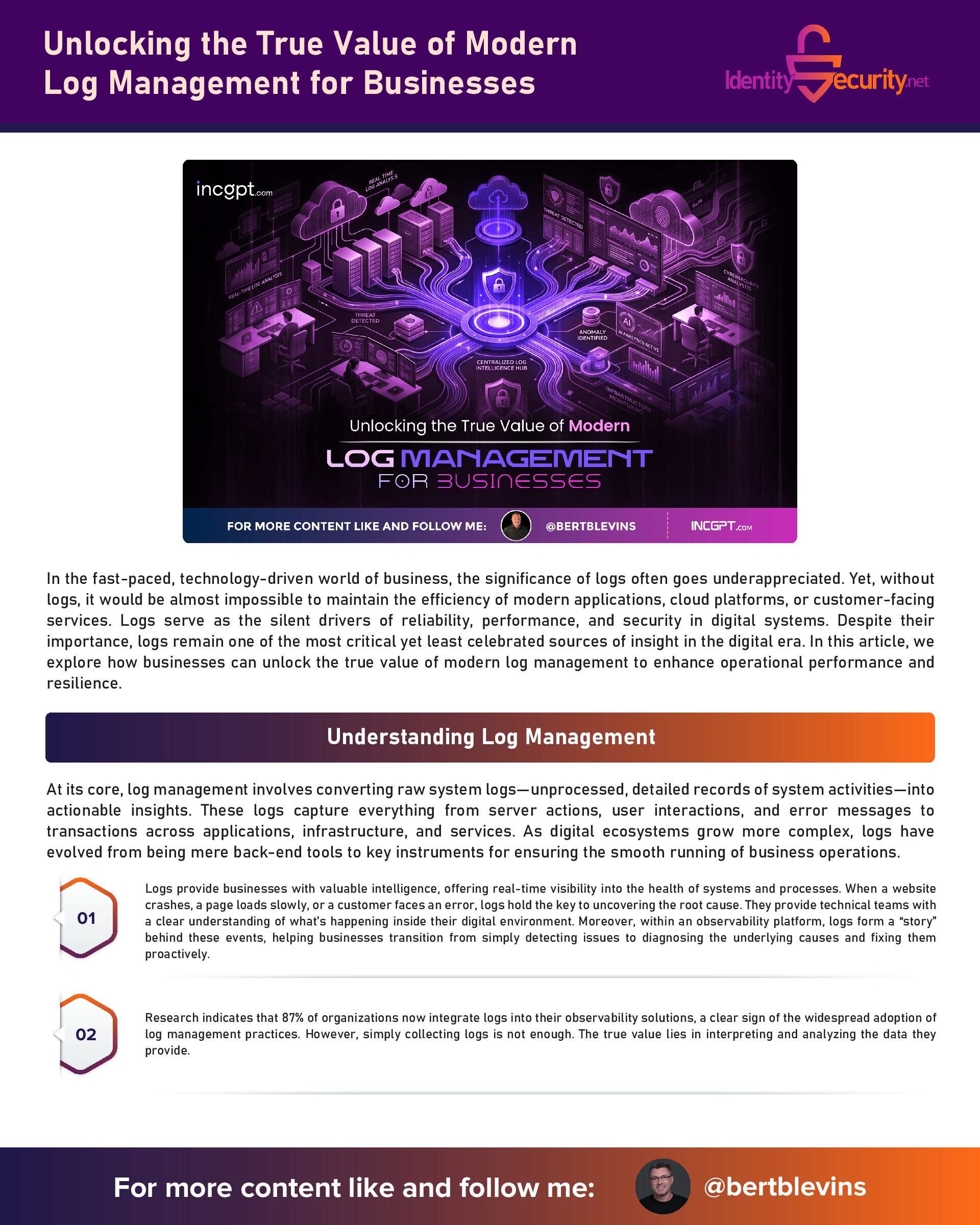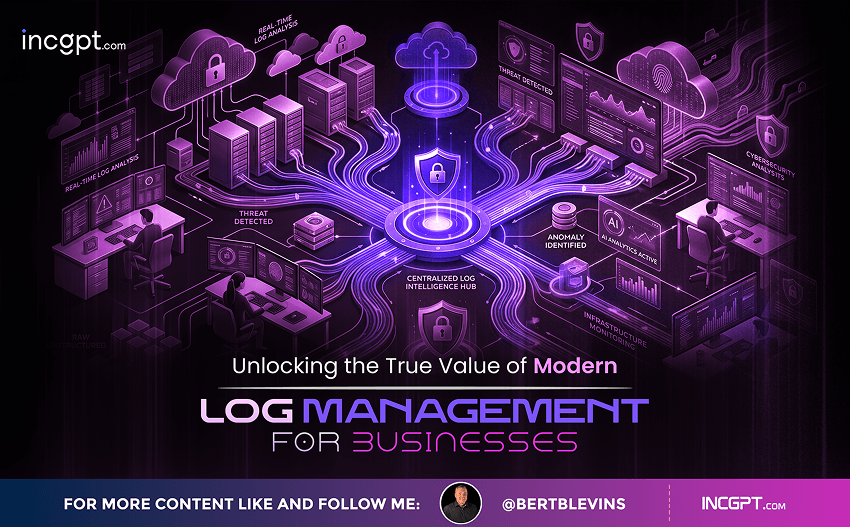
Unlocking the True Value of Modern Log Management for Businesses
In the fast-paced, technology-driven world of business, the significance of logs often goes underappreciated. Yet, without logs, it would be almost impossible to maintain the efficiency of modern applications, cloud platforms, or customer-facing services. Logs serve as the silent drivers of reliability, performance, and security in digital systems. Despite their importance, logs remain one of the most critical yet least celebrated sources of insight in the digital era. In this article, we explore how businesses can unlock the true value of modern log management to enhance operational performance and resilience.
Understanding Log Management
At its core, log management involves converting raw system logs—unprocessed, detailed records of system activities—into actionable insights. These logs capture everything from server actions, user interactions, and error messages to transactions across applications, infrastructure, and services. As digital ecosystems grow more complex, logs have evolved from being mere back-end tools to key instruments for ensuring the smooth running of business operations.
Logs provide businesses with valuable intelligence, offering real-time visibility into the health of systems and processes. When a website crashes, a page loads slowly, or a customer faces an error, logs hold the key to uncovering the root cause. They provide technical teams with a clear understanding of what’s happening inside their digital environment. Moreover, within an observability platform, logs form a “story” behind these events, helping businesses transition from simply detecting issues to diagnosing the underlying causes and fixing them proactively.
Research indicates that 87% of organizations now integrate logs into their observability solutions, a clear sign of the widespread adoption of log management practices. However, simply collecting logs is not enough. The true value lies in interpreting and analyzing the data they provide.
The Challenges of Traditional Log Management
As digital systems expand, the volume of logs being generated increases exponentially. In large-scale applications and cloud environments, businesses are bombarded with an overwhelming amount of log data. Yet, the mere increase in data doesn’t necessarily equate to better insight. In fact, many teams struggle with separating meaningful information from the noise. This issue arises from the sheer volume of logs, which often leads to confusion and inefficiencies.
The challenges of traditional log management are twofold: complexity and cost. As businesses grow, they often find themselves drowning in a sea of log data that they struggle to organize, interpret, and store efficiently. This overload of data can cause IT and security teams to miss crucial signals, delaying responses to critical incidents and preventing proactive issue resolution.
Moreover, traditional log management models are often financially burdensome. With fragmented storage solutions, outdated licensing systems, and a lack of clear organizational purpose, the cost of storing and managing log telemetry can quickly escalate. Instead of being viewed as a strategic asset, log management can become a costly liability. This makes it increasingly difficult for businesses to see the value of logs as a critical tool for driving performance and resilience.
The Need for a Smarter Approach to Log Management
To unlock the full value of log data, businesses need to adopt a smarter, more strategic approach to log management. Traditional methods are no longer suitable in today’s fast-paced, cloud-first business environments. To overcome the challenges of volume and complexity, businesses must focus on clarity, efficiency, and value.
Rather than treating logs as an endless stream of technical data, forward-thinking businesses are learning to use them as a lens to better understand their digital ecosystems. The real value of logs lies in identifying which ones matter the most and filtering out the rest. By focusing on the logs that drive key business metrics such as resilience, security, customer experience, and compliance, organizations can turn log data into actionable intelligence.
Artificial intelligence (AI) is playing a critical role in this evolution. AI-powered log management systems can detect anomalies, trace issues back to their root causes, and even trigger automated fixes. This reduces the need for manual investigation, accelerates recovery times, and helps teams move from reactive troubleshooting to proactive problem-solving. By incorporating AI into log management, businesses can significantly enhance their ability to identify issues before they escalate, leading to a more resilient digital environment.
The Importance of Selectivity in Log Management
One of the key components of modern log management is selectivity. With the ever-growing volume of data being generated, organizations must be discerning about which logs to capture, store, and prioritize. Not every log is crucial, and businesses that can identify the most important data streams will be able to streamline their log management efforts.
This selective approach allows businesses to control costs while ensuring that they are focusing their attention on the telemetry that offers the most value. For example, logs related to critical system components, customer interactions, and security threats should take priority, while less impactful data can be discarded or stored more cost-effectively. By treating logs as a strategic asset rather than a data overload, organizations can gain deeper insights into their systems and operations without the unnecessary clutter.
When organizations master this balance, log management evolves from a simple task into a strategic capability. It becomes a tool that enhances performance, strengthens resilience, and drives operational excellence. This shift in perspective transforms log management from a tactical task into a business-critical activity that shapes decision-making at all levels.
The Bigger Picture: AI-Powered Observability
While logs alone offer valuable insight, they represent only one piece of the puzzle. To unlock the full potential of log management, organizations must integrate logs with other observability data, such as metrics, traces, and events. When these data types are combined in a unified observability platform, they provide a complete, real-time picture of system performance and business impact.
Consider a telecommunications company that was managing over 15TB of logs daily, spread across numerous dashboards and storage systems. The team found themselves buried in data, unable to extract meaningful insights quickly. By consolidating logs into a broader observability framework and leveraging AI-powered detection capabilities, the company was able to cut through the noise and focus on the signals that mattered most. As a result, they were able to improve uptime, reduce response times, and enhance overall system resilience.
This example illustrates the true value of observability—helping businesses make sense of complex data and derive actionable insights that improve operational performance. By uniting logs with metrics, traces, and events, organizations gain a more holistic view of their systems, enabling them to respond faster, troubleshoot more effectively, and align their technical performance with business goals.
How Businesses Can Unlock the Full Value of Log Management
To unlock the true value of log management, businesses must take a comprehensive approach that combines smarter data collection, AI-powered insights, and holistic observability. Modern log management systems should integrate AI, automation, and intelligent detection capabilities, empowering businesses to proactively identify and resolve issues before they impact users.
Enterprises that embrace these technologies will be able to analyze data faster, automate responses more intelligently, and innovate with confidence. This level of modernization enables organizations to shift from being reactive to proactive in their approach to system performance and security.
True modernization in log management comes from rethinking how organizations approach data. It requires adopting platforms that integrate AI, context, correlation, and smarter telemetry management practices. By doing so, businesses can gain greater clarity, reduce operational costs, and ensure their systems remain resilient, secure, and aligned with their strategic goals.
Conclusion
In today’s digital age, logs are not just technical artifacts—they are valuable sources of business intelligence. By moving away from outdated log management practices and adopting smarter, more strategic approaches, businesses can transform their log data into actionable insights that drive performance, resilience, and security. The companies that thrive will be those that treat logs not as mere exhaust from their systems, but as evidence of how their business operates and performs. By bringing intelligence to the data they already have, they can unlock the full potential of log management and turn it into a continuous source of competitive advantage.