AI INSIGHTS

Explore Expert
AI Articles & Insights

Explore expert insights, practical guides, emerging trends, and thoughtful perspectives on artificial intelligence and technology.
AI
INSIGHTS
As the White House moves toward federal review of powerful AI models, a deeper question hangs over the industry: do we actually know how to build a safe one?
In the realm of neuroscience, a provocative idea is emerging: consciousness is not an accurate reflection of reality but a “controlled hallucination” our brains construct to help us navigate life. This theory suggests that what we perceive as reality is more akin to a prediction generated by our brain, constantly adjusted based on sensory input. Neuroscientists argue that this model is essential for survival, helping us create a sense of stability and continuity in a chaotic world.
Artificial Intelligence (AI) has integrated into daily life and revolutionized how we perform tasks, offering greater efficiency and convenience. However, the use of AI in cognitive offloading—relying on AI to complete tasks traditionally done by humans—has unintended consequences. These consequences are not uniformly experienced by all generations. While adults use AI to simplify familiar tasks, AI’s influence on children may be more damaging, as it replaces the learning process that is critical for cognitive development.
Workers are pasting confidential data into ChatGPT, Gemini, and Claude without telling anyone. The productivity wins are real. So are the security holes.
As the tech world progresses into the era of “agentic AI” in 2026, we are seeing the rise of autonomous agents that take over tasks such as booking flights, diagnosing system outages, managing infrastructure, and curating media. These systems represent a significant leap from simple chatbots to agents capable of executing complex, real-world tasks. However, this technological advancement brings with it an often-overlooked challenge: ensuring the integrity of the data that powers these agents.
An open-source project, a wave of Chinese clones, and even an Nvidia release are quietly proving that AI agents do not have to belong to a single platform.
You probably know the meeting. The board wants an AI agent strategy by the end of the quarter, a senior leader has read a consulting report, and you have been handed the job of building the platform. The slide says “AI-native,” the success criteria are vague, and someone offers a reassuring “we can just wrap it ourselves.” When you ask what finished looks like, the room goes quiet. That silence is the whole problem. The cost of building gets estimated long before anyone agrees on what is being built, and the work being dropped on internal teams is far larger than the people assigning it understand.
A new Chainalysis forecast projects stablecoin transaction volumes climbing into the quadrillions within a decade — and reshaping where investors look for exposure to the next era of money movement.
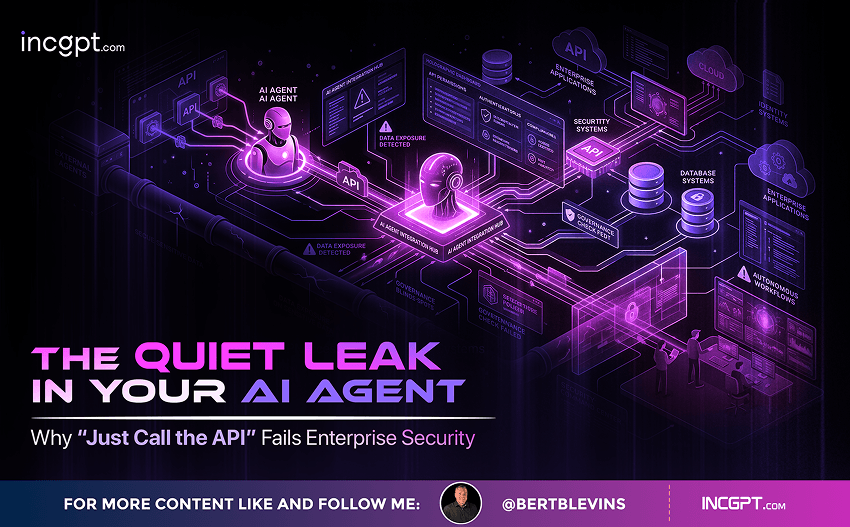
Most companies have built internal AI assistants that demo beautifully and hemorrhage sensitive data with every question. The problem isn’t the model — it’s the architecture.
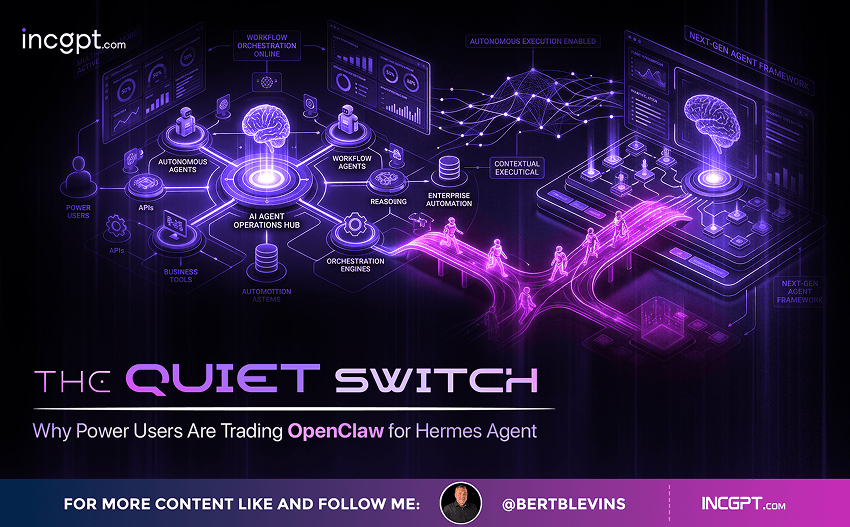
OpenClaw moves fast and breaks things. Hermes Agent moves slowly on purpose — and that boring discipline is exactly why it is winning the AI task automation race.
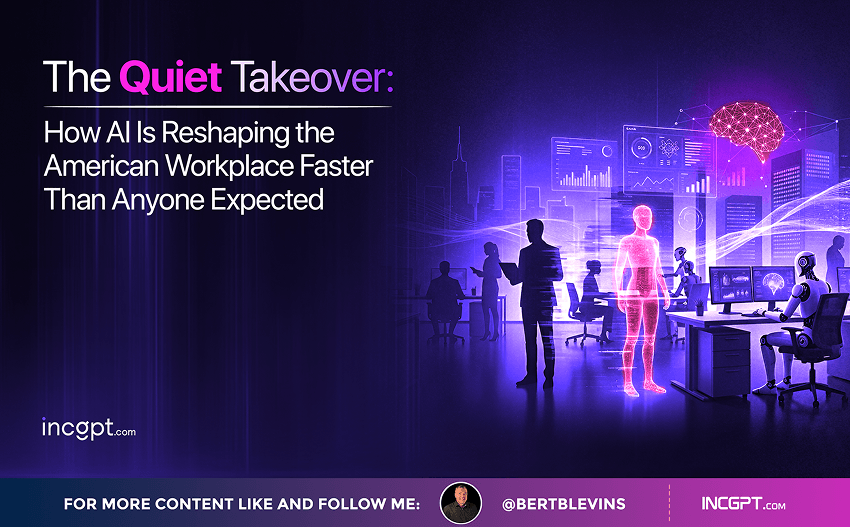
New survey data reveals that artificial intelligence is no longer a future concern. For millions of American workers, the transformation is already underway.
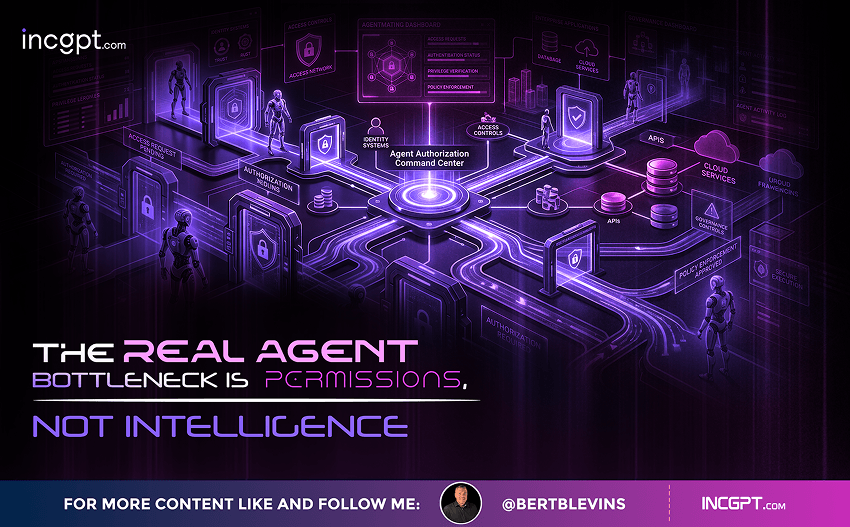
Enterprise AI agents are stalling well short of their promise. The cause isn’t a weak model — it’s the unanswered question of what each agent is allowed to do, on whose authority, and how the system can prove it.
Artificial intelligence has crossed a critical threshold. What began as experimental tools in research labs has become standard equipment in hiring departments, customer service centers, and strategic planning rooms across corporate America. Yet as AI adoption accelerates, a surprising truth is emerging: the biggest obstacles to successful implementation have nothing to do with code quality or computational power.
The advent of artificial intelligence (AI) has significantly transformed the landscape of coding and software development. One of the most recent trends to emerge from this revolution is “vibe coding,” a concept that has opened the doors to software creation for people without traditional coding backgrounds. This shift is making it easier for individuals in various sectors to build and implement software solutions without relying on expert developers. With AI-powered tools like ChatGPT and Google Gemini, vibe coding is ushering in a new era of creation and innovation, where anyone can become their own software engineer.
Artificial Intelligence (AI) is increasingly being embraced by organizations to enhance security operations, yet concerns surrounding its integration and effectiveness persist. Despite AI’s growing presence in security workflows, human oversight remains a critical factor in ensuring its success. A report by Crogl, commissioned by agentic AI company Ponemon Institute, delves into the current state of AI adoption in enterprise security operations, revealing that while AI is a promising force in the field, its limitations must be addressed to maximize its potential.
Ask ten people in tech what responsible AI design means and you will get ten different answers. Ethics frameworks, trustworthy AI principles, responsible innovation checklists — the vocabulary keeps expanding. But beneath all of that lies a simpler question: when someone is sitting in front of an AI-powered product, what actually makes the experience good?
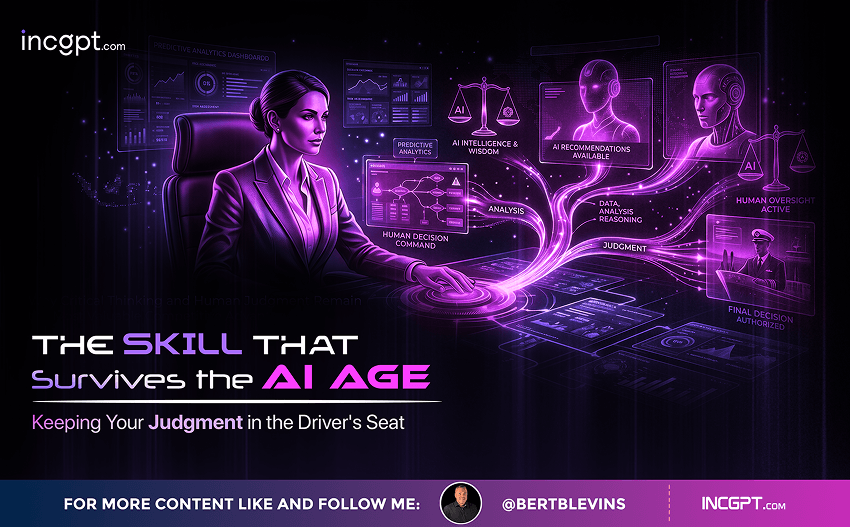
Almost everyone is going to use AI at work. That part is no longer up for debate. The choice is no longer whether to use these tools but how to use them without quietly handing over the one thing that makes your work worth anything in the first place — your judgment.
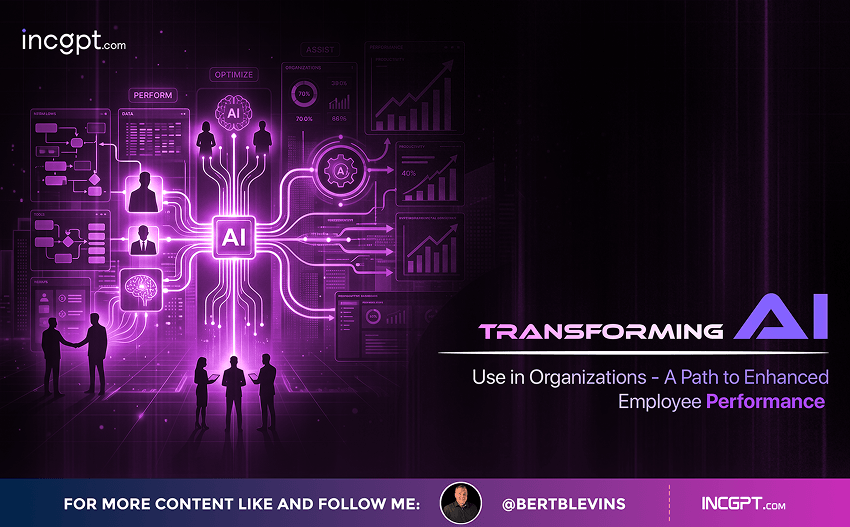
As Artificial Intelligence (AI) continues to infiltrate workplaces across industries, organizations are quick to adopt AI tools for their employees. However, despite the widespread usage, many organizations struggle to assess the real impact of these tools. Are employees using AI to its full potential? How can AI improve the quality, speed, and ambition of their work? These questions remain largely unanswered, and most companies fall back on tracking activity metrics such as the number of prompts or hours logged, which don’t necessarily capture the sophistication or true value of AI usage. In this article, we explore the key behaviors that separate advanced AI users from the rest and provide actionable insights on how to foster better AI usage across all employee levels.
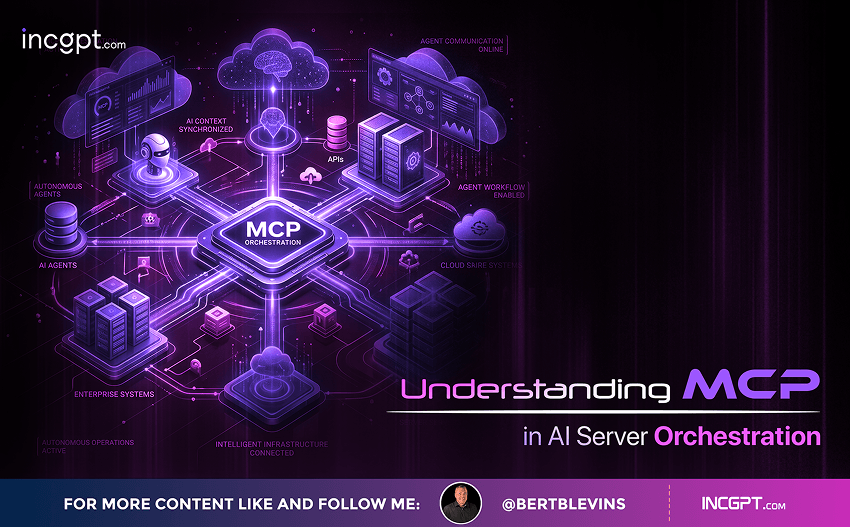
The Model Context Protocol (MCP) has rapidly emerged as a pivotal standard in AI server orchestration, revolutionizing the way AI models, tools, and servers interact in complex workflows. Launched by Anthropic in 2024, and supported by tech giants like OpenAI, Microsoft, and Amazon, MCP facilitates seamless, bidirectional communication between AI agents and external systems. It serves as an “API gateway,” handling the exchange of data and tools, thus simplifying the orchestration of multiple AI agents working across servers.

© 2026 BertBlevins.com · All Rights Reserved